Escalating Rhetoric and Strategic Discontent
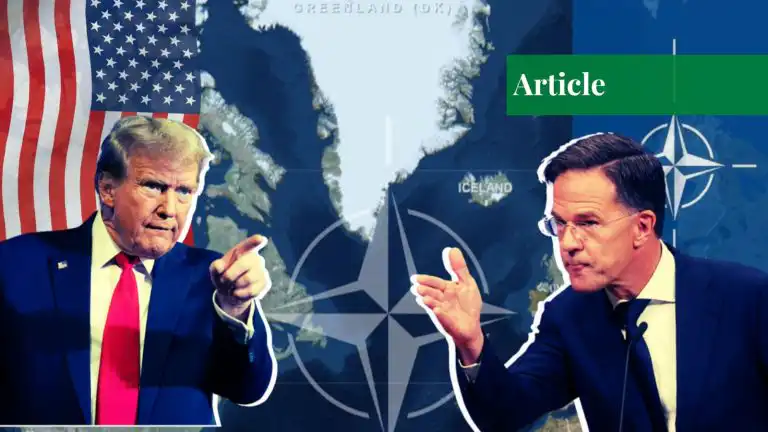
In the past couple of days, NATO has been plunged into yet another crisis after the Trump administration lashed out at the alliance’s European members for apparently not doing enough to help the US prosecute its war in Iran. The rhetoric from senior US officials has been quite astonishing. Trump told Reuters that he felt disgust towards NATO, described it as a paper tiger to the Telegraph, and threatened to pull the US out entirely.
Well, the US Secretary of State Marco Rubio said, “The US was going to have to re-examine the value of its membership in the alliance. But I do think, unfortunately, we are going to have to re-examine whether or not this alliance that has served this country well, for a while, is still serving that purpose, or has it now become a one-way street where America is simply in a position to defend Europe. But when we need the help of our allies, they’re going to deny us basing rights, and they’re going to deny us overflight.”
Trump has two issues with NATO at the moment. The first is the decision by a number of European countries to limit America’s use of bases and airspace. Spain, for instance, closed its airspace to US planes involved in the Iran war. Italy denied landing rights to several US bombers at the Sigonella base in eastern Sicily, and France prevented Israel from using its airspace to transport American weapons to be used in the war. These European states generally argue that they’re imposing these restrictions to stay on the right side of international law, but the US has accused them of essentially failing to show sufficient solidarity with a fellow ally.
European Resistance and Operational Constraints
Secondly, Trump is apparently annoyed by the fact that European NATO members aren’t helping to reopen the Strait of Hormuz. For context, the Strait of Hormuz is a narrow waterway between Iran and Oman that connects the Persian Gulf and Gulf of Aiden and thus the rest of the world. In normal terms, it’s a vital artery for the global economy with something like 20% of the world’s oil and gas flowing from oil producers in Saudi Arabia, Kuwait, and the UAE to oil importers in Asia and Europe, but traffic through the straight collapsed at the beginning of the war after Iran launched a series of missile and drone strikes against transiting ships and announced that passage would now require Iranian permission.
For their part, Trump and other senior US officials made essentially three arguments in pushing European NATO members to get involved. First, they argued that European NATO members were obliged to help out a fellow NATO ally. Second, they argued that they owed it to the US for its support in Ukraine. And third, they argued that it was in Europe’s self-interest anyway because Europe relies more on oil supplies exported via the Strait of Hormuz. European NATO members apparently weren’t convinced by any of these arguments. On the first argument, there’s nothing in any NATO treaty obliging European states to come to America’s aid here.
NATO Article 5
NATO’s famous Article 5 only applies when an alliance member has been attacked, not when they attack another country, as America has in Iran. On the second argument that Europe essentially owes America for its help in Ukraine, this is a difficult argument for Trump to make, given that his administration has withdrawn basically all military aid to Ukraine and spent most of the past 12 months playing diplomatic footsie with the Kremlin.
Furthermore, European also argue that the main reason the Biden administration supported Ukraine wasn’t because they felt obligated to help Europe, but rather because seeing Russia as a strategic adversary, they deem supporting Ukraine in America’s strategic interests in much the same way that Europe currently thinks that it’s in their strategic interest to stay out of the war in Iran and it made sense from a strategic perspective for the United States to cease funding the Ukrainian government.
Indeed, contrary to what might be popularly believed, the Biden administration did not support Ukraine all that much before March 2022, but decided to dramatically increase its funding to Ukraine once it became apparent that Ukraine was able to withstand Russian aggression and inflict a strategic defeat upon Russia. Regarding the third argument, even though almost no oil produced in the Strait of Hormuz makes its way to the United States and some of it reaches Europe (although a very small fraction of what reaches Asia), this fact does not necessarily mean that Europe is dependent on the Strait reopening more than the United States.
Strait of Hormuz Dispute and Strategic Divergence
While the closure of the Strait of Hormuz might thus have a more immediate impact on Europe, the aggregate effect is higher global oil prices, which affect the US as much as it affects Europe. It is a fact that the US is currently a massive oil producer; higher prices mean more profits for American oil and gas producers, but it is bad news for the rest of the US economy, which dwarfs the shale industry, and for American consumers. But perhaps most significantly, European countries don’t believe that getting involved will actually help to open up the Strait; properly reopening the Strait will require either Iran’s total surrender or some sort of deal with Iran.
European NATO members apparently don’t believe that Iran’s surrender is forthcoming, and thus getting involved in the war will probably make it harder to do a deal while incurring escalatory risks. This is why European NATO members have been unwilling to get involved in the war more generally. Even the more pro-American members do not want to go to war without an exit strategy. Therefore, considering all this, is NATO going to be over? Well, at least not officially. According to the National Defense Authorization Act for fiscal year 2023, which was initiated by Senator Marco Rubio, the President cannot leave the organization on his own without a two-thirds vote from the Senate or without any other bill being passed.
Even if, legally speaking, it’s hanging in there, practically speaking, NATO feels pretty much dead at the moment. The US clearly doesn’t think that its nominal allies in Europe are doing enough to help it out in Iran. And it’s hard to imagine the current US administration responding to an Article 5 request by another NATO member in the way that European states would consider adequate. Moreover, while Trump can’t legally withdraw from the alliance, he could instead just withdraw all US troops and weaponry from NATO structures, which doesn’t feel too unlikely an outcome in the current climate and would render NATO redundant.
If you want to submit your articles and/or research papers, please visit the Submissions page.
To stay updated with the latest jobs, CSS news, internships, scholarships, and current affairs articles, join our Community Forum!
The views and opinions expressed in this article/paper are the author’s own and do not necessarily reflect the editorial position of Paradigm Shift.

Muhammad Haseeb Sulehria is a student of Defense and Strategic Studies at Quaid-i-Azam University, and a former internee at Pakistan’s Ministry of Defense. With a keen interest in national and international affairs, he actively explores issues of security, strategy, and global politics, aspiring to contribute to policymaking and peacebuilding.