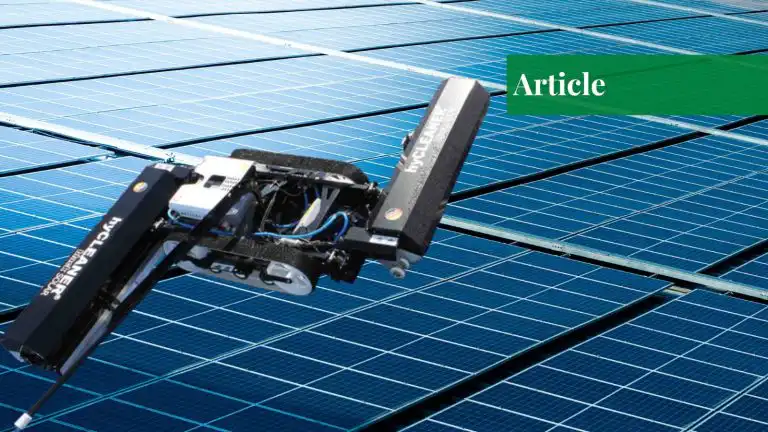
Soiling, or dust/sand and pollutants on PV modules, can reduce power output by as much as 25% in certain cases. If panels are not clean, the yields can decrease by approximately 40% within months in a desert or industrial climate. Research has indicated that automated robotic cleaning can regain most of this loss. In one case, the daily output of dry-robot cleaning was recovered by up to ~31% in a Saudi trial, while a U.S. pilot showed an 18% yield increase on robot-cleaned arrays as compared to uncleaned controls.
Robots also require substantially less water and labor. Candi Solar’s report estimates that robots use only 0.3-0.5 L/panel, manual washing requires 1-2 L, and a 1 MW park requires only 2 cleaning robot washes rather than 4-8 people operators. There are already several effective cleaning methods that are commercialized, such as brushes, water- or air-driven, or electrostatic. In Pakistan’s arid environment (with high dust loads and seasonal rains), locally adapted robotic solutions can significantly enhance solar PV production, save valuable water, and significantly reduce operation & maintenance (O&M). We summarize findings and make policy recommendations. Encourage the mass deployment of solar farms with a view to running the facilities at peak efficiency in Pakistan. Soiling losses are a problem in Pakistan’s climate.
Soiling Losses in Pakistan’s Climate
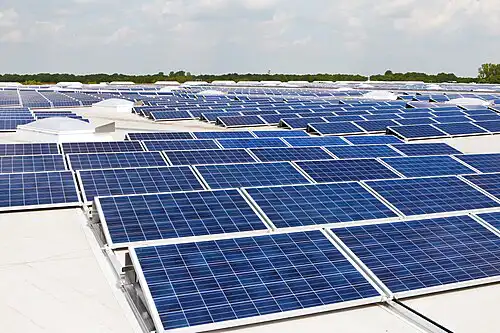
Irradiance is the most important factor affecting PV yield, after dust. Pakistan has a dry climate. The weather in Pakistan is dry. The amount of soiling is extremely high in dry and windy air. A study on the roofs of Lahore detected a build-up of 0.8% on panels during the months of October to January. Internationally, tests have demonstrated that 40–50% of the power is lost in a few weeks in desert environments. For instance, desert sand can reduce the productivity of a farm by ~40%, as reported by the National Renewable Energy Lab (NREL), if not cleaned. Even in moist and coastal regions, pollutants such as Soot, pollen, and salt crusts stick very well to glass. This is far below nameplate outputs. Pakistan’s long, dry summers are followed by monsoon rainfall, and thus panels need to be cleaned more frequently than is required in temperate climates.
Globally, NREL’s soiling analysis puts annualized losses as low as 0.5%/year in temperate, rainy climates but as high as 30%/year in deserts such as the Middle East, with revenue losses that can reach millions of dollars per year on large utility-scale systems. The IEA-PVPS global soiling task-force report similarly documents wide regional variation, with the highest losses concentrated in arid, low-rainfall zones. Even in humid or coastal areas, contaminants like soot, pollen, and salt crusts adhere tenaciously to glass. Pakistan’s long, dry summers followed by monsoon rains — which can leave mud and organic grime — mean panels likely require more frequent cleaning than in temperate climates.
Robotic vs. Manual Cleaning: Efficiency and Water Use
Manual wash schedules are more irregular in achieving a dirt-free surface and cannot guarantee that the panels will be cleaned to the same extent every time, creating long gaps with dirt build-up. In comparative trials, an autonomous robot running daily returned 15-20% more energy than an uncleaned control string. The other field test took place in Islamabad, where 15.5% of lost energy was recovered by an automated spray-bar robot. Within a few percent of ideal, while less frequent manual cleans result in a steady decrease in output between washes.
Water and labour are also significantly reduced, as are the time and cost of robotics. A Candi Solar field study mentions that 4-8 people and 1-2 hydropots are required to operate a park of 1 MW. A single robot (2 operators) can clean 3 MW per day, whereas by hand it would take days of cleaning. Water usage is also significantly reduced to 0.3–0.5 L/panel with robotic brushes compared to 1–2 L/panel using traditional hoses. “Dry-brush” robots are waterless robots that use almost no water. Since Pakistan suffers from water savings of 70-85% in cleaning, water is a big advantage in the face of seasonal water stress. Reducing personnel also reduces O&M expenses. The lower lifetime recurring costs and more reliable performance of wind power also provide advantages. The initial cost of the robots is typically offset by higher energy sales in 2 to 4 years.
Comparison: Manual vs. Robotic Cleaning
| Metric | Manual Cleaning | Robotic Cleaning |
| Labor per 1 MW | 4–8 workers, 1–2 days | 2 people, covers ~3 MW/day |
| Water use/ panel | ~1–2 L | ~0.3–0.5 L (wet robot) or 0 (dry robot) |
| Daily output gain | Occasional (lost until clean) | 15–20% on average (up to ~30% reported |
| O&M cost | High (daily crews, safety overhead) | Lower (automation: minimal crew, night operation) |
| Payback/ return on investment(ROI) | N/A (ongoing expense) | Typical 2-4 years |
Sources: Candi solar/ Solaris Hydrobotics case studies
Case Studies and Demonstrations
- Israel (Negev Desert): Arava Power’s 4.95 MW Ketura Sun farm was launched with Ecoppia E4 waterless robots, and it was reported that they have received no rain so far and are very dusty. A pilot was able to collect approx 99% of the dust each night. Nearly 100 robots are now cleaning the field without human intervention, without the need for slow manual cleaning. The result was that the stability of output is significantly improved, and there is no reduction in output during cleaning.
- South Africa (Industrial Solar): A Schneider-owned mechanised dry-cleaning project by Candi Solar. A full day of manual work was cut to 2 hours with robot work by Electric Site. This proved that even complex sites, i.e multiple panel types, can be serviced quickly by robots with minimal interruption.
- United States (C&I Roof Installations): A pilot with Soalris Hydrobotics used a water-driven cleaner to clean a commercial array daily. During the test period, the area cleaned by the robot generated 18% more energy per day than an identical uncleaned string. Notably, cleaning occurred at night, and lab tests showed no wear on the panel even after the equivalent of 25 years of cleaning.
- Pakistan (Islamabad Trial): Investigation of a new moving-bar sprayer for water recycling found nearly 15.5% output recovery and 88% of cleaning water saved. The system will recover its costs in approximately 4 years at local energy and water rates. This study validates the possibility of robots being able to Designed specific to Pakistan and delivering a high return on investment (ROI).
These real-world examples always yield substantial increases in yield and cost savings. Now, robotic systems have been proven to work in both farms and factories, even in dry regions. In desert regions (Israel and the Middle East), dust-prone cities, and humid areas. The trends are evident: regular cleaning (daily or weekly) with robots helps to keep panels at peak efficiency, while monthly or less frequent manual operation allows for a drop in efficiency. As water washes away, losses accumulate.
Cleaning Technologies and Models
Robotic cleaners come in various forms:
- Brush Robots (wet or dry): Wheeled or tracked units use rotating brushes and optionally water jets. Example: IFBOT’s M20 machine is a water-powered brush robot, 12.7 kg, 1000 m²/h. It scrubs rows when working in wet mode, with an operator setting the operation to be performed on the panels. There are numerous such designs that demand a water hose with minimum spray (~0.4 L/panel). Dry-brush robots are also known as robots with dry brushes. The carts are also waterless or are tetherless and recharge between nightly runs.
- Water-Blade Systems: Some robots make use of oscillating spray bars, e.g., as in the Islamabad study with micro-filtration and water re-capture. These recover 80–90% of water and reduce water levels by an impressive amount. Reduces fresh water needs.
- Drone-based: Unmanned aerial vehicles can be used to blow dust off panels using compressed air or blower jets. Drones are good at inspection; they can reach high or irregular arrays, but battery life constrains the coverage; now they augment ground bots.
- Electrostatic/ Self-Cleaning Coatings: Emerging method uses charged plates or special coatings to push dust away. These systems can run passively, keeping panels 95% to 98% clean while consuming a negligible 0.5% to 2% of the solar plant’s electricity. By applying them directly as the top glass layer during panel manufacturing, operators can drastically lower overall cleaning frequencies.
A few examples illustrate current specs (water use, speed, tilt capability) – instead of a comprehensive market table, here are representative figures:
Leading Models
| Robot (Company) | Cleaning Method | Water Use | Coverage Rate | Notes |
| IFBOT M20 (IFBOT, CH) | Dual brush + water | ~0.4 L/ panel | 1000 m²/hour | Lightweight (12.7 kg); tilt ≤15°. |
| E4 Series (Ecoppia, IL) | Dry brush (waterless) | 0 L | 5-10MW/week* | Fully autonomous, cloud-managed. |
| Solaris Hydrobot (IL/US) | Water-driven brush | Low (filtered) | 3 MW/day | Self-powered by water pressure, no rails. |
| SolarCleano L1 (ES) | Dry brush | 0 L | 1 ha/hour | Four brush heads, multi-tilt. |
*Ecoppia E4-3 covers a 5 MW field (Ketura Sun) with ~100 robots nightly; throughput ≈5 MW/ night. These examples show robots range from portable units for rooftops to fleets for utility farms. Modern systems integrate GPS/IoT navigation and AI scheduling to optimize cleaning intervals (such as doing extra passes after dust storms).
Economics, O&M, and Payback
Robotic cleaning significantly reduces total O&M costs.
Water savings: Automated washes use 80-90% less fresh water. Fresh water (vital for Pakistan’s semi-arid zones).
Labor savings: With robots, few technicians suffice to oversee large arrays vs dozens of manual crews.
Energy gains: Even if the yield were increased by just 10-20% each year, that would be considerable income. For example, Solaris worked out that an 18% boost on a 3 MW site would add ~$100,000/year to a ~$566,000 baseline production. This additional cash flow more than covers the cost of the robot and lasts for 25 years.
Payback: Utility-scale cleaning robots have a most-likely payback time of 2–4 years. This is in line with our local context, as even with relatively low electricity costs, a few percent will be recovered. Equipment cost can be recovered if output is increased by 5 years. Importantly, these investments also decrease future damage to the panel, i.e dirty panels can get “hot spots” or micro-cracks and increase module life.
The table above indicates the approximate productivity, where the number of manual cleaning cycles can be reduced by one wet-robot for each installation. By an order of magnitude, there is an even closer range of near 100% cleanliness. In the long run, robots become a recurring expense. Over time, robots turn a recurring cost, i.e monthly crew visits, into a mostly fixed one, improving long-term bankability of solar projects.
Design Considerations for Pakistan
Pakistan’s climate poses specific challenges and opportunities. Much local dust contains soil, sand, and industrial soot. Wet cleaning may be needed to remove sticky grime after monsoons. Extreme heat in Sindh/ Balochistan means robots must be rugged. Fortunately, cleaning is done at night when panels cool, which modern systems support. Many large PV plants in Pakistan have trackers or high tilts; a few robots like IFBOT have a limited tilt range of up to 15°, so site layout matters. Flat rooftop installations with a tilt angle of <10° are ideal for small robots. Dry or water-recycling robots should be prioritized. For example, integrating mist sprays with filtration fits areas where water is precious.
Design adaptations might include larger brushes or heated nozzles for early-drying dust, and sensor-based scheduling. Solar panel factories could also consider anti-soil coating on new modules, as deployed by LONGi.
Policy Recommendations
It is suggested that the following practices be followed to scale up the solar cleaning robot in Pakistan:
- R&D and Demonstrations: Support collaborative projects between universities (NUST, PIEAS, etc) to develop cleaning-bots or to modify imported cleaning-bots to suit local requirements by the industry.
- Add robotic cleaning to the procurement of large solar schemes (e.g., under AEDB/PCP). Offer partial subsidies or tax breaks for projects that involve automation, as some European countries do.
- Standards and Certification: Ensure better availability of standards and certification for automated cleaning. Responsible for supporting the certification of cleaning robots (safety, IP-rated for dust, water, etc.) to develop confidence.
- Training and Skill-Building: Initiate training and skill-building programs for local technicians to operate and maintain cleaning robots. Engage Vocational institutes for integration of “solar O&M robotics” in the curriculum.
- Integration with Solar policy: Upgrade net-metering or PPA frameworks to consider guaranteed plant performance. Cleanliness requirements could be a part of PPAs to ensure cleaning happens reliably.
- Water Conservation: Encourage technologies that do not require water or require water to be recirculated, and integrate these with water-stressed activities in Regional policies. Even take into account ‘virtual water’ accounting; promote renewable projects that reduce consumption of water, like water-energy nexus projects.
By considering cleaning technology as infrastructure, rather than optional extras, policymakers can lock in the advantages of solar energy. In efficiency. This will reduce the levelized cost of energy (LCOE) for Pakistan’s solar and will meet the climate target and save water. Solar robots are expected to make up a significant part of the global market, especially taking into account the world’s growing acceptance. Exceed $1.2 billion by 2034; it is sensible for Pakistan to leapfrog to these solutions rather than lag.
Case Studies and Comparisons
Case Studies of Robotic Cleaning Deployments:
| Site/Project | Robot/System | Outcome | Source |
| Schneider Electric (Johannesburg) | SolarCleano robots | 1-2 days of manual cleaning done in 2 hours by robot | Candi Solar (2023) |
| Ketura Sun (Israel) | Ecoppia EcoClear (100 units) | 99% dust removal, nightly clean of 5 MW park | Ecoppia/Arava (case study) |
| Demo PV Site (USA) | Solaris HydroBot | 18% daily yield vs uncleaned string | Solaris white paper (2022) |
| Islamabad (Pakistan) | Moving-bar sprayer w/ recycle (test) | 15.5% output recovered; 88%water saved; 4-year payback | Energy Reports (2026) |
Manual vs. Robotic Cleaning:
| Metric | Manual Cleaning | Robotic Cleaning |
| Water use per panel | 1–2 L | 0.3–0.5 L (wet brush), 0 L (dry robot) |
| Labor (per 1 MW) | 4-8 people, 1-2 days | 2 people (1 robot) daily |
| Cleaning speed | Slow (each MW takes days) | Fast (3 MW/day per robot |
| Energy gain | None (only stops loss) | 15-30% daily yield |
| O&M cost | High (continuous crews) | Lower (fixed robot + minimal crews) |
Each figure is illustrative of large-scale utility practice; actual numbers vary by technology. The trends are consistent: robots slash water/labor needs and keep energy high.
Conclusion
We have seen firsthand that Pakistan’s booming solar sector can only live up to its promise if panels stay clean. As a researcher in renewable energy, I have watched yields suffer under dust. The data is clear: automated cleaning is not a luxury but a necessity. If we want every sunray to count, adopting robot cleaners is the way forward.
The harshest conditions are at our country’s plants in Sindh and Balochistan; if they are not engaged in intervention, their production is gradually lost each month. Contrast this with plants that are now in neighboring countries. These robots have worked around the clock on a nightly basis, and losses have almost been eliminated. These are not exotic examples, but practical solutions tested in the most challenging environments, as we have here.
I urge policymakers, regulators, and project developers to include robotic cleaning in the solar system plan of Pakistan. The federal and provincial governments should provide funding for pilot programs, e.g., through NUST and PIEAS or any other reputable institution, to establish automation procurement objectives and develop a new workforce for high-tech maintenance. This will lower operating expenses, conserve water, and provide the clean energy our economy demands. Overall, “clean energy” does not simply refer to the purchase of panels; it’s all about keeping them clean. Embracing Robotic cleaning is a smart, data-driven decision that will benefit every megawatt. Let us make sure that Pakistan’s solar pledge is not blotted out by dust, but lit up by smart technology and progressive policy.
If you want to submit your articles and/or research papers, please visit the Submissions page.
To stay updated with the latest jobs, CSS news, internships, scholarships, and current affairs articles, join our Community Forum!
The views and opinions expressed in this article/paper are the author’s own and do not necessarily reflect the editorial position of Paradigm Shift.
Zohra Iqbal is an Electrical & Instrumentation Engineer with interests in renewable energy, solar power, and sustainable technologies.