There exists a trend in most of Pakistan whereby a girl’s life is often determined even before she understands how to dream. She has her whole life ahead of her, and the life is taken away, not because of some inexorable law, but because of the cage of culture. Thousands of Pakistani girls-as young as 14 years old, and sometimes younger-are taken out of school and married off to men who are twice their age, looking their finest dressed in bridal red. This is not culture. It is child marriage, which is a human rights abuse with the mask of tradition and honor.
A Reality That Asks Futures
Young marriages provide girls with an experience they never wanted when girls are being married off at a young age and deprived of the choices that come with their childhood. They are denied education, financial independence, and even health. Pregnant girls below the age of 18 experience great dangers to their health during pregnancy and childbirth. The World Health Organization declares that pregnancy and childbirth-related complications are the major causes of death among girls aged between 15 and 19 years. Child marriage further exacerbates the crisis of maternal mortality in Pakistan, where this indicator is already quite high, 186 deaths out of 100,000 live births.
The Numbers Tell the Story, But Are We Keen?
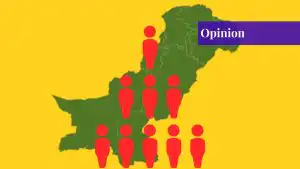
UNICEF estimates that almost 18% of girls in Pakistan are married by the age of 18, 4 per cent under 15. The actual numbers could be greater in such provinces as Baluchistan, South Punjab, and rural Sindh, where practices dominate over the law. There is also an increasing rate of child marriages reported in 2022. According to “Girls Not Brides,” there is a 6th-highest number of child brides in Pakistan compared to other countries in the world. It implies that millions of nationwide girls could be and will be deprived of education, health, and independence in the future, for many generations.
Costly Thing in the Dressing Gown of the Economy
The issue of child marriage is mostly camouflaged as a means of minimizing fiscal strain on families. However, in the actual sense, it keeps whole societies in poverty. An estimate by the World Bank indicated that by 2030, child marriage could lead to more than 500 billion dollars of extra earnings and savings on health care and welfare in the whole world. A Pakistani girl who acquires an education through secondary education is capable of earning 60 percent more than a girl who does not acquire secondary education. Rather, at a young age, she is usually poor, uneducated, and abandoned in marriage. Her children will probably be malnutrition and will also tend to drop out of school.
Romanticizing Harm
Child marriages are usually glorified by our media and society in the form of dramas, songs, and other traditions. They have lavish weddings and disregard questions relating to consent or age. In case girls attempt to resist, they are shamed, silenced, or punished.
I faced a lot of problems in marriage. I was young and did not know how to be a wife. I was pregnant, had to look after my husband, do housework, deal with in-laws, and work on the farm. My worst time was when I was pregnant; I had to do all this and deal with a pregnancy while I was just a child myself.
—Elina V., married at age 15, Malawi
What is honorable about the ending of girls’ education to uphold a reputation? Or making her be a mother even when she is not ready emotionally or physically?
The Loopholes that Bite Back in Law
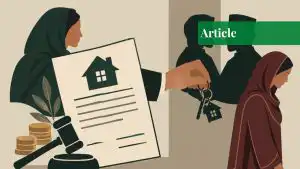
The legal framework of Child Marriage in Pakistan is erratic. Although Sindh passed the Sindh Child Marriage Restraint Act, 2013, outlawing marriage under 18 years, other provinces, such as Punjab and Khyber Pakhtunkhwa, have a minimum marriage age of 16 years. Girls have weak protection through the civil law, as religious interpretations can be employed to overrule it.
In 2022, a Federal Child Marriage Restraint (Amendment) Bill to raise the national marriage age to 18 was defeated in Parliament. Opponents argued it was against Sharia practices, although several Muslim-dominant countries such as Morocco, Egypt, and Turkey have changed their marriage brackets to the age of 18.
What Must Be Changed?
- National Law: The standard age of marriage has to be fixed throughout Pakistan at 18 years old, no exceptions, for both boys and girls.
- Campaigns to the people: Run campaigns through media, radio, opinion shapers, and curriculum in schools to debunk the myths on child marriage.
- Religious Leadership: Mobilize progressive religious theorists to make declarations to condemn forced and underage marriages in an open manner.
- Community Mobilization: NGOs such as Blue Veins and Aurat Foundation are already doing a commendable job in this respect – they should get wider publicity, greater funding, and protection.
All Girls Deserve a Childhood
Girls need schools, not bridal rooms. They should be treated like notebooks and not motherhood. They should have the right to become bigger, laugh, learn, and dream. It is not only a lapse in culture when in a world where already, millions of Pakistani children have lost access to schools (conservatively, about 22.8 million Pakistani children are out of school, according to UNICEF Pakistan, to have our children be taken out of schools at such an early age is nothing less than a nationwide crisis. Why don’t we stop naming it a tradition and call it by its name: an offense against the fundamental human rights. Due to the reason that the childhood of a girl is not a burden, it is a right.
If you want to submit your articles and/or research papers, please visit the Submissions page.
To stay updated with the latest jobs, CSS news, internships, scholarships, and current affairs articles, join our Community Forum!
The views and opinions expressed in this article/paper are the author’s own and do not necessarily reflect the editorial position of Paradigm Shift.

Amna Imtiaz is an undergraduate student of International Relations at the International Islamic University Islamabad, with a strong interest in global affairs, diplomacy, and sustainable development. She is passionate about storytelling, youth empowerment, and using media as a tool for social change. Her writing reflects a thoughtful perspective on current events, policy, and human rights.