
The word “democracy” is a combination of two Greek words: “demos,” meaning a citizen or state, and “kratos,” meaning rule. The origin of democracy can be traced back to ancient Greek civilization. At that time, democracy was different from today’s representative democracy. The reason is that women and slaves were not involved directly in the political process. Democracy’s approach is people-centric. However, democracy has some flaws and disadvantages. It often ignores minorities, creates a ground for populists, and struggles with a transparent election process without voter manipulation. These flaws should be analyzed to gain a holistic view of democracy.
Marginalizing Minorities
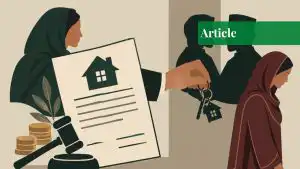
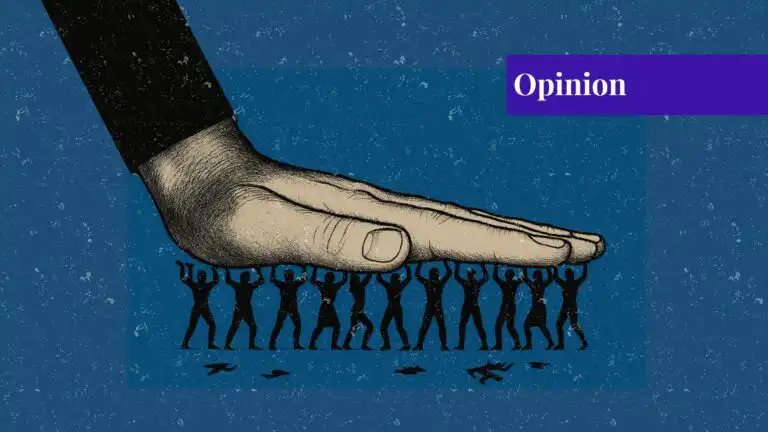
Democracy is based on majoritarianism; in this system, the majority rules, and leaders make their decisions by keeping in view the whims of the majority. For instance, if we closely observe the political speeches of major parties in Pakistan. Most of their themes reflect Islamic identity by celebrating and reinforcing it. Here, a question arises about the rights of minority groups and their problems. In Pakistan, we have Sikhs and Hindus as well, but politicians are inclined towards the majority.
Religious minorities have to face problems like inaccessibility to justice and sectarian violence, but their voices are unheard, and their issues remain unaddressed. Thus, minorities feel alienated and ignored. Here, a question arises about how to strike a balance between the majority and the minority.
Rise of Populism
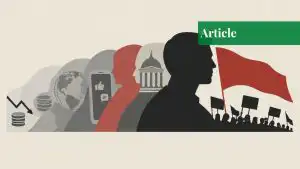
Visionary leadership is difficult to find because politicians who know how to persuade the masses surpass visionary leaders. In the combo of democracy and populism, it is a tough job for true leadership to be elected by the people. For example, the rise of Imran Khan, a former cricketer who gained popularity with his persuasive speeches. Critics argue that he gained the support of the people, which is the primary goal of politicians. However, he lacks long-term vision about the economy of our country, often associated with visionary leaders. Hence, celebrities rule the people with their approach.
Voting Rights
Not everyone is equal in terms of voting. During election day, a person who is a laborer and a person with a PhD have an equal vote to cast. Is it fair? Or is it justified if we look into a person with a PhD? Subsequently, uninformed labor will make weak choices, or there is a high chance of manipulation, as we observe in the context of Pakistan. In the mainstream media of Pakistan, visuals highlighted that people are offered food like biryani in exchange for their vision and future.
On the other hand, educated people cast their vote based on long-term policies, performance, and ideology. Their knowledge helps them to make informed choices. Hence, proper training should be introduced to spread awareness about voting and the political process.
The Limitations of Freedom
Excessive freedom can lead to chaos. In political philosophy, it is often debated how to create a balance between individual freedom and state authority. However, to some extent, it is clear that one person’s freedom should not violate another’s. It means your actions should not harm other people. In a democracy, people block the roads by saying that they’re exercising their freedom. Resultantly, ambulances and people’s necessary activities are affected.
For instance, PTI rallies in Islamabad. Hence, individuals should be aware of their limits of freedom. There should be proper solutions through which flaws of democracy could be mitigated. Like, mainstream political parties have to make sure to include minorities in their manifesto; parties have to make sure of the safety of minorities, whether it is linguistic, ethnic, or religious. The government has to keep a check and ensure that reserved seats have actual legislative power.
Minorities should be able to make their voices heard among the crowd of the majority. In school and all educational institutions, political education should be introduced to help voters make informed choices. Political education should not be limited to students only; other citizens must be a part of the political education. This will help them to make informed choices. Lastly, civic education is crucial to ensure that even in diversity, national unity can be achieved. People will embrace differences and enjoy them as a natural vibrancy. These reforms are crucial to making the core ideals of democracy alive and turning the disadvantages around.
If you want to submit your articles and/or research papers, please visit the Submissions page.
To stay updated with the latest jobs, CSS news, internships, scholarships, and current affairs articles, join our Community Forum!
The views and opinions expressed in this article/paper are the author’s own and do not necessarily reflect the editorial position of Paradigm Shift.

Imtiaz Munir is currently pursuing a BS in English with a focus on linguistics and literature at Bahria University, Islamabad. He is an active reader with a strong grasp of political theories, having explored concepts like justice and forms of government. He enjoys analyzing political themes with a philosophical approach. At present, he is working on his research thesis to meet academic requirements and further his interest in critical analysis.