The Consequences of a Lack of Disaster Preparedness
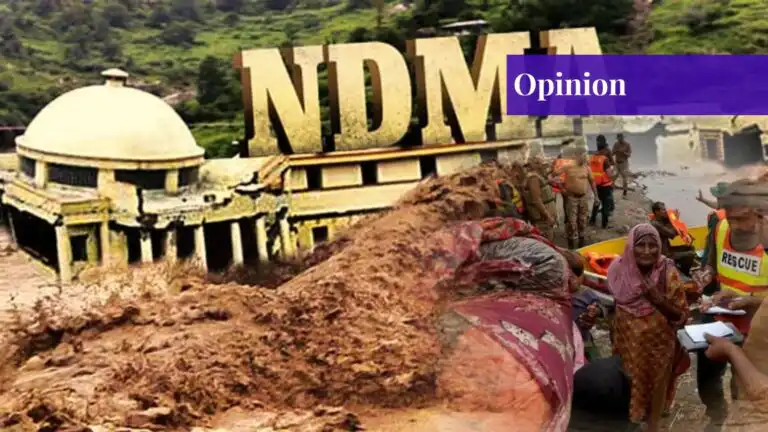
Over the past few years, the monsoon season in Pakistan has become a nightmare for the population and authorities, as the rising incidents of cloudbursts have resulted in flash floods across the country. This aggressive weather pattern is the consequence of climate change, as our region is most vulnerable to the changing behaviors of the climate. In the month of August, various parts of Khyber Pakhtunkhwa were hit by catastrophic flash floods, with the most affected areas being Buner, Shangla, Mansehra, Swat, and Sawabi. At least 300 casualties, with many missing and injured, as recorded by the Provincial Disaster Management Authority of KP.
Why Disaster Management Is Inefficient in Pakistan
This loss of human life is not just the result of climate change; various structural inefficiencies are also intensifying the devastating outcomes. In Pakistan, the National Disaster Management Authority was established in 2007 after an act was passed to transform the Earthquake Reconstruction and Rehabilitation Agency (created in response to the 2005 earthquake) into a permanent federal institution.
Under the 18th Amendment of 2010, many subjects were devolved to provinces; among them was disaster management. Across provinces, the Provincial Disaster Management Authority was created, and at the district level, a disaster management officer was appointed for disaster response and recovery. This devolution of power left the NDMA powerless in many matters, especially in the quick response to protect the lives of people.
NDMA is working under the prime minister’s command and provides early warnings with effective responses. This effective response is hindered by the 18th Amendment. In various districts, the disaster management officers are not even appointed, and if present, then multiple bureaucratic delays contribute to situations as we witnessed in Khyber Pakhtunkhwa after flash floods.
The district disaster officer’s duties include disaster risk management planning for effective response and recovery by using early warning systems and raising awareness among locals. He is responsible for planning and development to strengthen disaster reduction and prepare for humanitarian relief. But unfortunately, in Pakistan, such planning is not part of the policy-making, and if policies exist, implementation is weak. The district disaster management authority’s lack of effective planning led to inadequate preparedness and weak early warning systems, ultimately resulting in disastrous outcomes.
In addition to these administrative bottlenecks, the high death toll in recent floods can also be attributed to a lack of infrastructure and technology due to financial constraints. As per the 18th Amendment, the federal government provides funds to provincial governments, and they allocate that budget to various subjects under their command.
According to the 2025-26 budget, the KP government has broadly allocated 12 billion for relief, rehabilitation, and settlement, constituting 0.6% of the total budget. Because of the resource limitations, the technology and infrastructure available for the relief operations and risk assessments for natural disasters, like drones, helicopters, and boats, are limited in number. The recent helicopter crash further strained the response system, resulting in massive casualties.
The Gap in Coordination: Affecting Response to Emergencies
The coordination and communication gap between provincial and district-level disaster management authorities is also an important challenge in effective disaster response and management. NDMA releases early warnings through the Pakistan Meteorological Department, and PDMA communicates the instructions to district-level authorities.
In remote areas of KP, these alerts do not effectively trickle down due to a lack of communication networks and weak local dissemination. This often delayed the early warnings of evacuation and timely response from local authorities, consequently causing massive destruction. The topography of the remote valleys in KP also constrains any emergency response due to the rocky landscape and lack of road infrastructure, creating serious problems for local authorities to provide timely relief and recovery to disaster-stricken communities.
Climate change is a rising challenge, and to cope with the destructive nature of its outcomes, governments need to employ better policies and effective emergency responses. To prevent tragedies like those witnessed in Swat and Buner, efficient communication and coordination between disaster management at the national, provincial, and district levels are essential. As the first responder, the district disaster management authority should be adequately equipped with technology for both early warning systems and post-disaster relief in order to minimize casualties.
Disaster preparedness policies should be formulated and implemented at the district level, incorporating community-level engagement and raising awareness among locals about emergency evacuation. Additionally, an active Disaster Management Officer should be appointed in every district, particularly in the most vulnerable areas, to ensure active coordination with NDMA and PDMA for early warnings and resource allocations.
Conclusion
The outcomes of climate change are expected to worsen in the coming years, which requires the government to respond effectively at both the policy formulation and implementation levels to mitigate and adapt to climate change with less adverse outcomes. Addressing these structural inefficiencies would increase the quality of response by local authorities. With effective technology, infrastructure, early warning mechanisms, and better coordination at all levels, the death toll in such disasters can be minimized. By aligning the devolution of power with improved delivery at the local level, disaster management in Pakistan can be shifted from paperwork to preparedness.
If you want to submit your articles and/or research papers, please visit the Submissions page.
To stay updated with the latest jobs, CSS news, internships, scholarships, and current affairs articles, join our Community Forum!
The views and opinions expressed in this article/paper are the author’s own and do not necessarily reflect the editorial position of Paradigm Shift.

Mahnoor Azhar is currently pursuing her bachelor's in international relations from Fatima Jinnah Women's University, Rawalpindi. Her areas of interest are governance, public policy, and foreign policy.