The world feels tense. Wars and rivalries are spreading across continents. From the Middle East to Europe, from Asia to Africa, no region feels secure. Each conflict has its own history, yet they are connected by power struggles. People fear that one spark could set off a chain reaction. This clash in Gaza could draw Iran and the US into a full-blown war. An intense strike in Ukraine could pull NATO directly against Russia. A fight over Taiwan could bring America and China face-to-face. Civil wars in Africa could expand instability and invite outside powers.
In the past, wars often stayed local. Today, globalization makes that harder. Energy, trade, and technology connect us all. If one major region falls into crisis, others feel the shock immediately. Oil shortages, food insecurity, refugee flows, and cyberattacks can cross borders faster than armies. World War III will not start with one single event. It will grow from a series of small fires that join together. Gaza, Ukraine, Taiwan, and Africa are those fires today. Each one has the potential to spread, and together they could ignite something larger than the world has seen in generations.
Gaza and Israel: More Than a Land Dispute
The Gaza–Israel conflict is not just about land. It is about history, religion, and survival. Both sides see the struggle as existential. For Israel, security is everything. For Palestinians, dignity and nationhood are at stake. Fighting in Gaza sends shockwaves across the Middle East. Rockets, airstrikes, and civilian casualties fuel anger across Arab nations. Hezbollah strikes from Lebanon; Iran sends money and weapons to its allies, and the US gives military and diplomatic support to Israel.
As Samuel P. Huntington warned:
“The great divisions among humankind and the dominating source of conflict will be cultural.”
This is exactly what the Middle East shows us today. If Arab states like Egypt, Jordan, or Saudi Arabia are forced into the conflict, the fire could spread quickly. A regional war could draw in Europe, Russia, and even China. What begins in Gaza could become a global flashpoint.
Russia and Ukraine: Europe’s Tremor
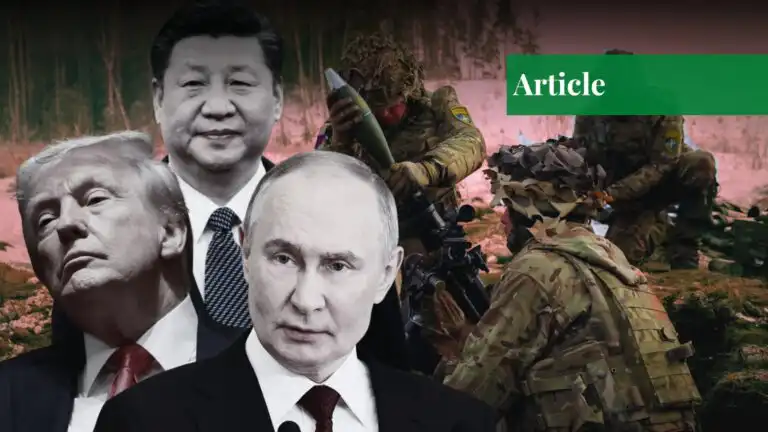
The war in Ukraine is the largest in Europe since World War II. Entire cities have been destroyed and millions have fled their homes. Both armies have suffered heavy losses. The war is not only about Ukraine’s sovereignty, it is also about Russia’s place in the world. Moscow feels NATO is closing in, while the West sees Russia as a threat to European security.
Years before the invasion, John J. Mearsheimer cautioned, “The United States and its European allies share most of the responsibility for this crisis.” He argued that NATO’s eastward expansion would provoke Russia. Many dismissed him, but now, his words look prophetic. NATO gives weapons, intelligence, and money to Ukraine while Russia relies on Iran for drones and on China for trade. The war is already a proxy battle between great powers.
As Richard Haass recently wrote, “The post-Cold War era of American pre-eminence…a new and more menacing epoch has begun.” If Russia were to strike a NATO country, the US would be forced to respond. That could escalate into a direct war between nuclear superpowers.
Taiwan and the South China Sea: Control of the Waves
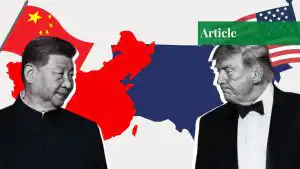
In Asia, the South China Sea is becoming a pressure point. China is building artificial islands. It is expanding its navy at record speed. Its goal is clear: dominance in Asia. Taiwan sits at the heart of this struggle. China calls it a breakaway province; the US and its allies see it as a democracy worth defending. If China invades Taiwan, it could trigger a direct clash between Beijing and Washington.
In his classic book, The Influence of Sea Power upon History, 1660–1783, Alfred Thayer Mahan declared, “Whoever rules the waves rules the world.” China seems to be acting on that belief. In The China–Pakistan Axis: Asia’s New Geopolitics, Andrew Small explains how China is building deep ties with Pakistan and reshaping regional power networks. These moves give Beijing new routes to the sea and new partners against Western influence.
If war breaks out over Taiwan, the consequences would be huge. The US, Japan, Australia, and India would likely be drawn in. Trade routes through the South China Sea carry one-third of global commerce. A naval clash here would hit the world economy instantly.
Africa’s Civil Wars: Hidden But Dangerous
Africa does not always make global headlines. Yet its conflicts matter deeply. In Sudan, rival armies fight for control. In Ethiopia, ethnic violence has displaced millions. In the Democratic Republic of Congo, rebel groups control resource-rich areas. In the Sahel, jihadist groups spread terror. These wars may look local, but they have a global impact. Refugees pour into Europe. Terror groups expand across borders. Great powers are already involved. Russian mercenaries, Chinese companies, and U.S. counter-terror forces are all active on the continent.
Huntington once said, “The fault lines between civilizations will be the battle lines of the future.” Africa shows us those fault lines today. The continent’s conflicts risk becoming proxy wars between the West, Russia, and China. If left unchecked, these wars could spread instability into Europe and the Middle East. They could also give extremist groups more space to grow. Africa may look far from the world’s centers of power, but in a globalized world, its conflicts matter to everyone.
The Nuclear Shadow
Nuclear weapons make this era more dangerous than the past. The US, Russia, and China hold thousands of warheads. North Korea has tested several. Israel is believed to have them. Iran is moving closer to building its own.
Haass warns the world is entering “a new and more menacing epoch.” The risk of miscalculation is enormous. One wrong move, one misunderstood signal, could lead to nuclear use. The shadow of Hiroshima and Nagasaki hangs over us still. A world war today would not look like 1939. It could be faster, deadlier, and possibly nuclear.
Can We Still Avoid It?
World War III is not inevitable. But the risks are rising. The lessons of Huntington, Mearsheimer, Haass, Small, and Mahan all point to one truth: rivalry is intensifying. World leaders face a choice: They can manage competition through diplomacy or they can allow mistrust and fear to push nations toward war. History will not ask only where the war began. It will ask why leaders failed to stop it. The sparks are here—Gaza, Ukraine, Taiwan, and Africa. The question is whether we allow them to light the fire.
If you want to submit your articles and/or research papers, please visit the Submissions page.
To stay updated with the latest jobs, CSS news, internships, scholarships, and current affairs articles, join our Community Forum!
The views and opinions expressed in this article/paper are the author’s own and do not necessarily reflect the editorial position of Paradigm Shift.