Origins of the Dispute
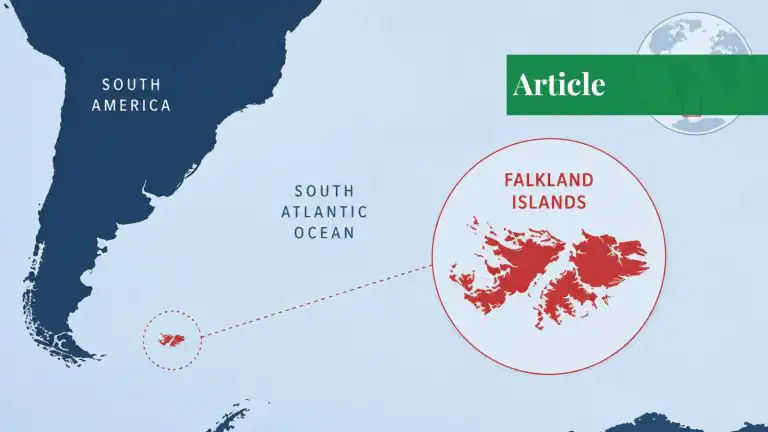
While some non-Brits often get confused about the difference between the UK, Britain, England, Scotland, Wales, the British Isles, Northern Ireland, and the Republic of Ireland. There’s also something called the Crown Dependencies and the British overseas territories. The overseas territories are areas, many of them with colonial era ties to the UK, that are under the sovereignty of the United Kingdom, but are not constitutionally part of the UK itself. Potentially the most controversial of these is the Falkland Islands, a small set of islands with a land area of only around 12,000 km squared in the South Atlantic, around 480 km from Argentina. What makes the Falkland Islands so controversial is that while the UK still maintains sovereignty over them, Argentina disputes this and even went to war with the British in 1982 to gain control of them.

Even to this day, the Argentinians still formally claim control over the Falkland Islands and in the last couple of weeks, Chile’s new president, Jose Antonio Kast, has also thrown his weight behind Argentina’s claims, reviving the debate once again If we look at the history of the island, Port Louie, the first ever settlement on the island, was built by a French navigator in 1764, while the second one, Port Egmont, was founded by the British. However, within just a few years, the British and French began to abandon these settlements. The French left in 1767 after selling their settlement to the Spanish. The British left in 1774 for cost-cutting reasons, but crucially didn’t renounce their claim to the island, and the Spanish left in 1811 to focus on the emerging South American wars of independence. In 1820, the Argentinian government, which had declared its independence from Spain only 4 years earlier, claimed sovereignty over the Falklands, and in 1832, it sent a military expedition to establish its own settlement there in order to solidify its claim.
However, this effort descended into chaos with the Argentine major who led the mission killed by his soldiers after arriving, and the garrison was then expelled by the British 4 months later. A British permanent settlement was established, and by 1885, around 1,800 people lived on the islands, although Argentina continued to dispute British sovereignty.
The 1982 War and Its Aftermath
A century later in 1982, the ruling Argentinian military government gave up attempting to negotiate with the British and assuming that the Thatcher government wouldn’t defend a set of islands more than 12,000 km away from the British mainland, launched an invasion to try to capture the islands by force.
However, Thatcher did defend the islands with a naval task force, plus US also provided support through air-to-air missiles, aviation fuel, and military stockpiles on Ascension Island, much to the dismay of Argentina, which hoped the US would remain neutral. After 74 days, Argentina surrendered, and the Falkland Islands remain British today, with a referendum in 2013 resulting in 99.8% support among residents for remaining a British overseas territory.
Why is the Falkland Islands Issue Getting Highlighted Again?
So why is the issue of Falkland Islands sovereignty back in the news? Well, the reason for that was basically a meeting held in Buenos Aires last week between President Javier Mille of Argentina and newly installed Chilean president Jose Antonio Kast, wherein Kast restated his country’s continued backing of the Argentine Republic’s legal claim to sovereignty over the Falkland Islands, as well as the necessity of the Argentine Republic and the UK resuming their negotiations in search for a peaceful settlement. Actually, to be technically correct, the Chileans’ backing of Argentina’s claims is not something new.
They’ve consistently backed Argentina on this in the last few decades. However, Argentina is in a much stronger position when it comes to claiming the Falkland Islands than it was before. As we see it, there are three reasons for this.
First, Mille has forged a close relationship with US President Donald Trump, who has described Mille as his favorite president. Given that Trump seems to operate largely on personal relationships and is currently frustrated with the UK for opposing his plans to annex Greenland and not allowing him use of British air bases in his assaults on Iran, it seems unlikely that Trump would support the UK in any dispute over the Falkland Islands. This seems only more unlikely when we consider Trump’s recent comments about a potential US withdrawal from NATO and his growing frustrations about the lack of support provided to him for the Iran war.
It’s worth remembering here that Thatcher’s close personal relationship with Reagan in 1982 was essential to the British defense of the islands, with one former adviser to Thatcher claiming that without American support, Britain would have lost the war. Second, Starmer’s Chagos Islands deal has led to concerns that Starmer may not choose to defend the British claim to the Falkland Islands if pressured. Essentially, in order to comply with rulings by the ICJ, Starmer has handed the Chaos Islands to Mauritius and has agreed to lease the military bases on Diego Garcia. However, this case is not precisely like what happened in the Falkland Islands. Even though there have been no ICJ judgments declaring Britain’s presence illegal there, some are concerned that this suggests that Starmer is not as dedicated to holding on to British territories overseas as previous prime ministers were.
In fact, Javier Mille himself has said Starmer’s deal to hand over the Chagos Islands proves that the Falklands could become Argentine again. This leads us to the third reason Argentina is in a stronger position than it used to be when it comes to the Falkland Islands. The declining presence of the British military in the region. In December, defense experts raised concerns over security in the Falkland Islands. While Britain does have fighter jets on the island, they only have a single ship, HMS 4th, protecting them. While Britain could obviously deploy further military equipment from the mainland, this would take time to deploy, and given the recent fiasco with HMS Dragon’s slow deployment to Cyprus, there’s not exactly much faith here.
Moreover, Argentina is currently expanding and modernizing its military. In December, the first six F-16 fighter jets purchased from the US arrived in Argentina, and the country has also purchased three Scorpene-class submarines and four offshore patrol vessels from France for more than $2 billion. Furthermore, they have attempted to buy two frigates that will substitute for two inactive ones.
So, is there any danger of an Argentinian invasion of the Falkland Islands? In truth, not really. The Argentinians have shown no signs of any kind of intentions, and the Argentine military is not capable of invading. However, Argentina’s standing in the area is getting better, and it seems that Mille has expressed his wish to get back his Falcons diplomatically in the future.
If you want to submit your articles and/or research papers, please visit the Submissions page.
To stay updated with the latest jobs, CSS news, internships, scholarships, and current affairs articles, join our Community Forum!
The views and opinions expressed in this article/paper are the author’s own and do not necessarily reflect the editorial position of Paradigm Shift!

Muhammad Haseeb Sulehria is a student of Defense and Strategic Studies at Quaid-i-Azam University, and a former internee at Pakistan’s Ministry of Defense. With a keen interest in national and international affairs, he actively explores issues of security, strategy, and global politics, aspiring to contribute to policymaking and peacebuilding.