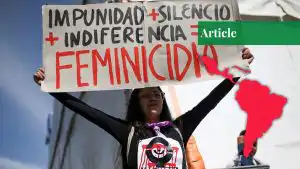
On the night of June 2, 2025, 17-year-old Sana Yousaf was shot dead in her home in Islamabad’s Sector G-13/1 by Umar Hayat, after she ignored his advances online. Sana, who had just celebrated her birthday, died instantly when Hayat shot her twice at point-blank range. The initial reason, as described by the police, was personal rejection, though in reality, many activists have rightly condemned it as part of a greater continuum of gendered violence in Pakistan.
Sana’s tragic killing is emblematic of a crisis that extends far beyond isolated “honor” disputes. Femicide, the gender-based killing of women, is identified too often as simply a social tragedy, yet in Pakistan, it constitutes a serious developmental crisis. When a society kills its most educated, ambitious, and visible women, it not only removes individuals but also forfeits collective progress.
In Pakistan, femicide is the most evident mirror of a fractured national psyche. Masculinity is equated with ownership and femininity is equated with silence. Each killing undermines faith in institutions, shatters the social contracts, and discourages women from integrating into public and economic life.
Postcolonial Masculinity and Control
The gender colonialism in South Asia brought more than an overlay of British societal respectability on top of precolonial expectations; it completely rewrote the parameters of authority to elevate a notion of the woman as “ward” rather than citizen. In the context of the personal law codes of 1872 and 1891, sex, marriage, inheritance, and guardianship were extracted from local, and usually elastic, practices, into an ossified court structure, whereby male relatives now had full authority with regard to women’s bodies and legal status.
The legal separation and containment of women’s autonomy significantly hardened again with the implementation of the 1937 Shariat Act in the North-West Frontier Province and, most strikingly, through the Islamization campaigns of General Zia ul-Haq in the late 1970s. The Hudood Ordinances didn’t just introduce new penal laws, they embodied a pedagogical instrument that trained an entire generation to understand that if found guilty of sexual violence a woman risked being subjected to court trial as an adulteress, thus establishing the full depiction of a woman’s rightful place as determined solely by her chastity and obedience.
Burdening these laws and legal codifications is a postcolonial crisis of masculine identity. Aware of their own frustrations with the hopelessness of social mobility, endemic corruption, and the perceived degradation of Pakistan’s position on the world stage, many men turn to their private lives and try to reclaim some sense of potency through the ultimate assertion of control: violence. In this context, femicide is not an arbitrary break from the ordinary, but a ritualized performance of power, a communication to all women that claims to an identity will be met with a claim to a territory. When a man’s private insecurities about his position in society merge with a political narrative of national pride, the female body is firmly placed into the terrain of personal and collective violence. Ultimately, a dangerous entanglement is created, where a man can legally and historically destroy a woman while enacting a symbolically grotesque version of a national trauma.
National Anxiety Projected onto Women’s Bodies
Women in Pakistan are caught in a dilemma: on one hand, they are celebrated as symbols of national pride, mothers of the nation, bearers of cultural honor, and on the other, they may be viewed as potential threats, their very agency deemed a threat to social cohesion. When the country goes through economic downturns, security emergencies, or rapid cultural shifts, these anxieties are aimed at women’s bodies. Rather than name structural failures, of unemployment, of corruption, or of political instability, public and private actors frequently choose to restore a perceived order by controlling women’s movements, behavior, and even their existence. Femicide, then, is not viewed as an anomaly, but rather a brutal interruption in an ongoing narrative that maps the liberated female as symptomatic of disorder in society.
Language is powerful in this regard. Police blotters and newspaper stories describe what is a planned gendered killing with euphemisms like “domestic dispute,” “indecent act,” or “family matter.” These euphemisms serve to lessen the awareness of femicide, but they are more than that; they normalize violence against women, making taking away a woman’s life look like a tragic misunderstanding rather than an escalation of violence and violation of women’s rights. This discursive diminishment prevents both full moral and legal anticipation of the perpetrators, while simultaneously relegating victims to the background, and neatly placing them in silence under private grievance.
Femicide as a Threat to National Development
The economic consequences of the human capital losses arising from femicide are staggering. According to the World Economic Forum, Pakistan ranks 145th out of 146 countries in its Global Gender Gap Index and has closed only roughly 57% of its total gender gap, and only 36% of its economic gap, the second lowest percentage in the world. Closing gaps in gender outcomes could increase GDP by as much as 30%, and yet with each tragic, violent removal of an educated woman, the country loses her productivity, as well as the ripple effects of her leadership, mentorship, and idea generation.
Women are the backbone of entrepreneurship, yet female‐owned SMEs face a global credit shortfall of nearly USD 1.7 trillion, and in Pakistan, only about 24% of women participate in the labor force, compared to 82% of men. Even in terms of financial inclusion, women face barriers: the World Bank’s Global Findex 2021 reports that only 13% of Pakistani women had a formal bank account compared to 34% of men, making it challenging to save, borrow, invest, and showcase their full economic potential. Although in 33% of reports women have access to a formal bank account, it is important to note that those account numbers include inactive “ghost” accounts when data is reported from the central bank, which means many women are still unbanked and excluded from the formal financial system.
Aside from economic measures, femicide also leads to a loss of social cohesion and a lack of both foreign and local investment. International business considers the level of gender‐based violence and women’s safety when assessing risk in a country; when companies view an area as unsafe for women, the result is capital flight, a reduction of foreign direct investment, and stalled development projects. For example, as indicated in a World Bank risk assessment framework, gender violence and associated political and social instability can increase borrowing costs and adversely affect individual entrepreneurial initiatives.
Moreover, the familial and communal impact of mental distress, from grief to fear and chronic mistrust, creates additional barriers to education (with girls often dropping out of school due to safety issues) and incorporation into the community, reinforcing cycles of poverty and violence. In communities where women’s lives are made visible, the harm done includes a loss of social capital; reliance on others diminishes, voluntary practices wither, and collective action disappears, all would have worked for an international aid agency, be it vaccinations or small-scale community-led infrastructure initiatives.
Legal Vacuum and Narrative Erasure
Surprisingly, Pakistani law provides no separate categorization for femicide. Women murdered are prosecuted as murder under broader homicide laws, or even worse, are absorbed under “honor killing,” where sentences can be more lenient if the perpetrator is related to the victim and gains the family pardon. Through Qisas-Diyat, where a victim’s heirs can “forgive” the killer for diya (monetary compensation), the charge of murder is converted into a civil settlement, and the killers of women usually walk away free (minimal or no prison time). Even where there are provincial protections (e.g. the Punjab Protection of Women against Violence Act (2016)), they are determinate on domestic violence (incorporating economic, psychological, stalking, and cybercrime), not recognizing that femicide is distinct violence and deserving of serious aggravated penalties.
This legal uncertainty sustains impunity at many levels. First, the fact that there is no separate category for “femicide” means there is no automatic mechanism for fast-tracked trials, mandatory enhancements to the sentence, standardized procedures for investigation, etc. Every femicide is retrospectively fitted into existing statutes and tried as either a crime of passion or murder, which does not take into consideration the gendered motivation or the social context of femicide.
Second, the absence of a legally required acknowledgement of “femicide” means that communities and families continually broker out-of-court “settlements” to avoid “dishonoring” the family and classify a public crime into a “domestic dispute,” which puts pressure on police and prosecutors not to enforce the law. In practice, the result is low reporting rates for honor-based killings (government data is often half that of the NGOs), and near-zero conviction rates.
A second driver of impunity is Pakistan’s tragic forensic capacity. Although the Criminal Law (Amendment) (Offence of Rape) Act 2016 requires DNA testing in cases involving sexual‐violence, many cases do not receive forensic evidence due to under-resourced and poorly trained forensic staff. Some forensic laboratories are barely kept functioning, have no standard practice or quality control, and are politically linked with police, adding to the already dysfunctional system.
The PFSA (Punjab Forensic Science Agency) is one of the few accredited laboratories in Pakistan, which regularly states “no semen detected” in cases where medical examinations state otherwise, and it does not help when police collect samples and leave them at room temperature for days before sending. Some cases show samples of room temperature and draughty storage for days, contradicting that any biological evidence has been collected or stored as required.
Conclusion
Acknowledging femicide as a development crisis will require not only a restructuring of legislation but a shift in societal narratives. First, Pakistani law needs to recognize femicide as a separate offence, with significant punishment without the possibility of familial pardons and independent prosecutions. Legislation is one way to show females that the state values their lives equally to men’s lives. Forensic investments, to compliment legal reform, will also signal changes to women in Pakistan. A forensic overlay could include varying types of crime-scene forensic investigations (i.e., without a forensic officer, and having DNA analyzed), and forensics that treat evidence and encounters with women (or other victims) as one that is victim-centered. The result is a better education for investigators, and no bias in the investigation based on gender.
However, legislation and forensics will not be enough. Members of community sectors, like the media and education, must work with community leaders to reject stereotypes that women are owned or property, and that violence against women is a virtue or honor. Members of the religious community can also intervene with regard to discussions surrounding shame and the interplay between shame and honor cultures. Survivors of femicide must be highlighted through public awareness campaigns, and education on violence against women must include male allies, who also friendship and media. The reframe must link respect for women to noble or virtuous behavior, including national pride. The educational and media sectors must be founded on linking respect with virtues like honor. Schools must include modules about consent, healthy relationships, and positive masculinity, as this generation of kids needs to be in a place where they know how to be against normalizing violence.
Ultimately, the path to Pakistan’s development lies in its capacity to protect all citizens. Where a state does not secure the lives of women, it chips away at the very bedrock of advancement: trust in institutions, the productive potential of human capital, and solidarity. Femicide is symptomatic of a wider identity crisis in Pakistani masculinity, and it must be approached with urgency. When Pakistan finds a way to bring together legal vigilance and institutional access, cultural renewal, and a sense of shared accountability, it will be able to treat this crisis as a pivotal moment in reaffirming the dignity and potential of all women.
If you want to submit your articles and/or research papers, please visit the Submissions page.
To stay updated with the latest jobs, CSS news, internships, scholarships, and current affairs articles, join our Community Forum!
The views and opinions expressed in this article/paper are the author’s own and do not necessarily reflect the editorial position of Paradigm Shift.

Momina Areej is currently pursuing an MPhil in Clinical Pharmacy Practice. With a passion for writing, she covers diverse topics including world issues, literature reviews, and poetry, bringing insightful perspectives to each subject. Her writing blends critical analysis with creative expression, reflecting her broad interests and academic background.