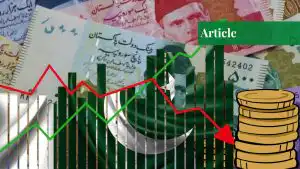
Financial Illiteracy in Pakistan
What are assets and liabilities? Most Pakistani students cannot answer this question, and that silence represents a quiet national failure. An asset, simply defined, puts money into your pocket, while a liability takes money out. These are not convoluted ideas, yet the average Pakistani student completes their degree between the ages of 22 and 24, secures employment by 25, and still never escapes financial struggle. The problem is not destitution but a complete absence of financial education, otherwise known as financial literacy in Pakistan. Almost every young Pakistani is fast-tracking to wealth, but wealth is not witchcraft; it is a system. And if you never learn how that system works, you remain trapped in a loop that most professionals never break.
Here is how the loop functions. You graduate, get a job, and receive your first paycheck. Then you spend almost everything on liabilities, rent, utility bills, a car, a phone on installments, dining out, and entertainment. Nothing comes back to you. Your salary increases over time, but your expenses rise too. You are running harder every year yet staying in exactly the same financial place. This is not financial independence. This is a treadmill. And most Pakistani professionals never step off it because they were never taught.
The evidence for this crisis is overwhelming. A study by the State Bank of Pakistan found that only 26 percent of Pakistanis are financially literate, meaning nearly three out of four people cannot distinguish between productive and destructive spending. The State Bank of Pakistan has repeatedly warned in its annual reports that financial illiteracy is destroying household savings and limiting national investment. The Pakistan Institute of Development Economics looked at this. It found that most Pakistani families do not have any real savings or investment plan. They do not have a plan, not even a simple plan. Then Karandaaz Pakistan came out with another number that should make us think: over 70 percent of Pakistanis do not even keep track of what they spend each month.
Who Is Responsible for Financial Education?
Where is the solution supposed to come from under the current system? Today, financial literacy in Pakistan is taught only through specialized university degrees such as BS FinTech, BBA, and MBA. The State Bank also runs awareness campaigns, but these reach a very narrow audience, mostly banking professionals and business students. A student of international relations, political science, engineering, or medicine graduates with zero exposure to budgeting, investing, or wealth management. Yet these same graduates will take loans, buy homes, manage salaries, and plan retirements in their practical lives. They are given no tools for any of these tasks. I myself learned about assets, liabilities, and investing through my own effort, not through any course or degree requirement.
Some people say, “Why should universities teach it, isn’t this the family’s job?” Families are supposed to teach kids how to save and how to spend wisely. Look, I get where that argument comes from. It sounds reasonable on the surface. But honestly? It falls apart the moment you think about it for two seconds.
How can families teach something they themselves never learned? They can’t. The same State Bank report tells us 74 percent of Pakistani households are financially illiterate. That means three out of every four families don’t know this stuff either. So expecting families to fix this problem? That is not a real plan. That is an excuse. A comfortable excuse, but still an excuse.
And here is the other thing. University years are exactly when young people start handling real money on their own. Maybe it’s pocket money from home. Maybe it’s a part-time job. Either way, families are not watching over their shoulders anymore. No one is there to say “don’t buy that” or “save some of this.” That independence is exactly the right time to teach. Not before when they had no money. Not after when bad habits are already set. Now. While they are still learning.
The solution is bold but completely practical. Every Pakistani student, regardless of their degree, must complete a compulsory course in personal finance. Budgeting, saving, investing—these are not advanced topics. A single semester. One credit hour. Existing economics or business faculty can teach the basics without new buildings or massive funding. Students should begin learning wealth building from the very first day they receive pocket money at a university. Simple habits like setting aside ten percent of any income, tracking every expense, and never buying on installments what does not generate returns can create financially disciplined adults. Without these habits, even individuals with six–figure salaries remain financially insecure.
I make this pledge publicly: financial literacy must become a compulsory subject in every Pakistani university. A nation cannot flourish when its young people cannot manage money. A generation cannot escape the cycle of endless spending when it confuses wants with needs and ownership with progress. Wealth building is not greed; it is a responsibility. Investing is not gambling; it is planning for a future that will not otherwise arrive. Pakistan does not need more finance graduates alone. It needs every graduate to be financially literate. That is how the country builds a flourishing society instead of repeating the same financial trap for another generation. That is how young Pakistanis finally stop chasing money and start making it work for them.
If you want to submit your articles and/or research papers, please visit the Submissions page.
To stay updated with the latest jobs, CSS news, internships, scholarships, and current affairs articles, join our Community Forum!
The views and opinions expressed in this article/paper are the author’s own and do not necessarily reflect the editorial position of Paradigm Shift.

Hadia Zaman is a student of peace and conflict studies at the National Defense University, Islamabad, with a growing interest in economic inequality, financial literacy, and the systemic barriers that limit access to financial knowledge in Pakistan. She is a self-taught learner exploring investing, budgeting, and wealth-building not as an expert, but as someone who believes these are skills every student should have access to. She currently works as a Business Development Executive and is the founder of HZ Atelier, a platform for business insights and lead generation. Her work reflects a curiosity about how education, economic empowerment, and social change intersect.