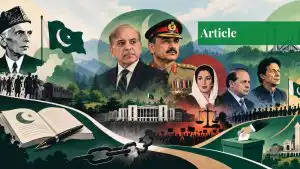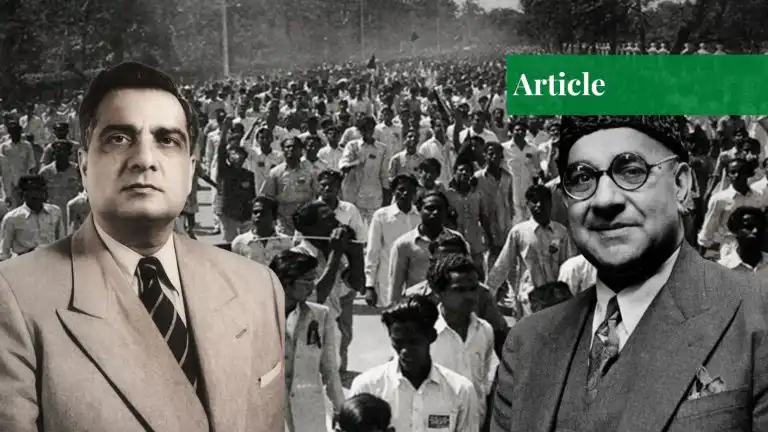
Pakistan emerged as an independent nation in August 1947 on the condition that democracy would prevail as the form of governance. Ever since the country emerged into the limelight, its elected institutions have been failing in performing their duties for various reasons, mainly because of the dominance of hierarchical institutions.
The death of Jinnah came as a shock to the entire nation. This created a huge gap, with Pakistan struggling for visionary leadership, constitutional development, and national security. Between the leadership of Liaquat Ali Khan and Iskander Mirza, Pakistan witnessed a long series of ups and downs with respect to constitution-making and political stability.
Liaquat Ali Khan and the Foundations of the New State
During his period between 1947 and 1951, Liaquat Ali Khan made crucial contributions to laying down the organizational, economic, and constitutional bases of the newly born nation despite the fact that Pakistan was plagued by various structural deficiencies at that point. The setting up of a functional central government in Karachi was among the very first tasks performed by the government under the leadership of Liaquat Ali Khan.
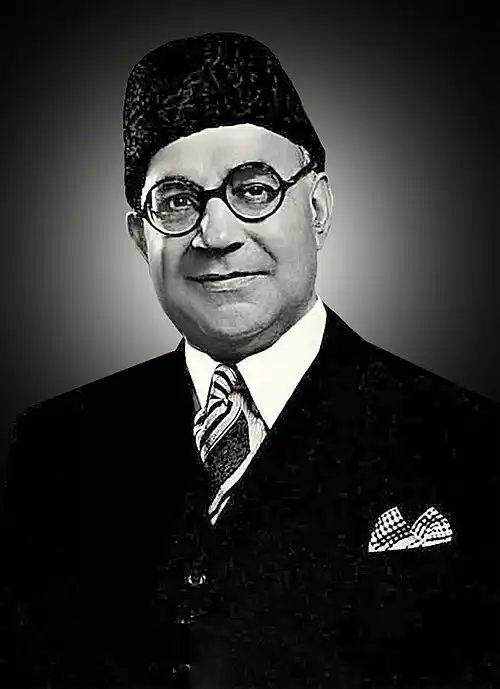
It is also known that the first-ever budget of the country was presented by his government in 1947. The establishment of the State Bank of Pakistan in July 1948 further enabled the country to control its monetary policies and currency independently. Yet another significant accomplishment during this period was the adoption of the Objectives Resolution in March 1949 by the Constituent Assembly.
Managing relations with India was one of his biggest problems since the partition resulted in territorial disputes, conflicts over property, and the protection of religious minorities. He signed the Liaquat-Nehru Pact with Indian PM Nehru in April 1950, which sought to ensure religious minority rights in both nations after the violence that occurred as a result of communal conflicts. In 1950, he went on an official visit to the US, where he met President Harry Truman. This visit led to cordial relations and global recognition of Pakistan’s requirements. On October 16, 1951,
Liaquat Ali Khan was shot dead while addressing a crowd at Rawalpindi. The killer was immediately shot dead by the police; thus, no investigation could be carried out. Liaquat Ali Khan’s last reported words were “May God protect Pakistan.”
Khawaja Nazimuddin and the Challenges of Governance
Khawaja Nazimuddin is known to be one of the prominent Bengali founding fathers of the state of Pakistan, who was a career politician coming from East Pakistan and who served as the second Governor-General of Pakistan between the years 1948 and 1951, till the death of Prime Minister Liaquat Ali Khan. After this, Khawaja Nazimuddin became the Prime Minister of Pakistan, which made him the second Prime Minister and first Bengali Prime Minister of the country.
As in the case of the Lahore riots of 1953, it was Nazimuddin who, for the first time, declared martial law in Punjab Province, headed by Major General Azam Khan and Colonel Rahimuddin Khan, which resulted in the repression of the whole Right-wing movement in the country. Moreover, relations with the USA, the Soviet Union, and India deteriorated, and they were unable to reduce the anti-Pakistan sentiment in those states.
The agitation against the Ahmadi religious minority was spearheaded in 1953 by a religious sect whose demands included the removal of the said religious minority from key leadership roles and its declaration as a non-Muslim sect. Sir Khawaja did not yield to such pressures, which resulted in mass riots in the Punjab province against the government as well as members of the said religious sect.
The then-governor-general, Ghulam Muhammad, asked for the resignation of the Prime Minister. Sir Khawaja did not submit, but Ghulam Muhammad prevailed when he employed a reserve power giving him the right to remove the Prime Minister. Rather than pass a decision on whether the dismissal was legally valid, Muhammad Munir, Chief Justice of the Federal Court of Pakistan, called for new elections, which produced another Bengali-born statesman, Muhammad Ali Bogra, as the new Prime Minister.
The Rise of Bureaucratic Influence under Ghulam Muhammad
The removal of Khawaja Nazimuddin from office became a landmark event in the constitutional history of Pakistan. Governor General Ghulam Muhammad became one of the dominant personalities of this era, which indicated the growth of the influence of non-elective bodies. On his instruction, Muhammad Ali Bogra became the new Prime Minister and came up with what is known as the “Bogra Formula.” This was meant to help reconcile differences regarding representation between the two wings of Pakistan.
The key features of the proposal included:
- A bicameral legislature to balance representation
- Equal representation of provinces in one house and population-based representation in another
- A stronger federal structure to prevent domination by any single region
- Preservation of Pakistan’s unity through institutional compromise
Despite being unique, the formula could not succeed in creating a constitutional consensus. Governor-General Ghulam Muhammad dismissed the Constituent Assembly in 1954 because it did not represent the interests of the nation any longer.
The judgment led to a constitutional controversy, and it was contested in the famous Maulvi Tamizuddin Khan case. Being the speaker of the Constituent Assembly, Maulvi Tamizuddin challenged Ghulam Muhammad’s decision because the Governor General of Pakistan did not have the constitutional right to dissolve the Assembly.
In the beginning, the court dismissed the case of dissolving the Assembly, siding with Maulvi Tamizuddin Khan. But in the Federal Court of Pakistan, Chief Justice Muhammad Munir overturned this verdict.
Iskander Mirza and the End of the Parliamentary Experiment
With Ghulam Muhammad’s failing health and political pressures, he finally had to step down in favor of Iskander Mirza in 1955. At this time, Chaudhry Mohammad Ali was appointed as Prime Minister, which is indicative of Pakistan’s increasing efforts at developing a constitutional setup. On 23rd March 1956, Pakistan adopted its first-ever constitution and became the Islamic Republic of Pakistan. In the process, Pakistan replaced the position of Governor-General with that of President, and a representative parliamentary form of governance was introduced through the constitutional setup.
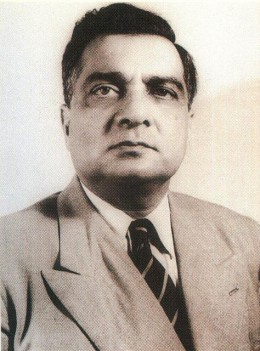
Iskander Mirza, the last Governor-General of Pakistan, became the first President under this new constitutional system. However, following the enactment of the Constitution of 1956, the political situation in Pakistan went into flux. Several Prime Ministers, including Huseyn Shaheed Suhrawardy, I. I. Chundrigar, and Feroz Khan Noon, served brief terms as Prime Minister.
President Iskander Mirza became more and more unhappy about the way parliamentarism was working. Seeing the political parties as weak and divided, he resorted to the use of his extensive executive powers and depended on the civil and military bureaucracy. In October 1958, Mirza suspended the constitution of 1956, dissolved the legislature, and imposed Martial Law. He also appointed General Ayub Khan as the Chief Martial Law Administrator in an attempt to impose order and consolidate power.
Mirza believed that Martial Law would give him the power to do whatever he wanted and that Ayub would assist him. But Ayub Khan had something else in his mind. But on the same day, when Iskander Mirza was sleeping, Gen. Azam Khan, Gen. K.M. Shaikh, and Gen. Burki, together with a squad of troops, woke him up from his sleep. Wearing only his bathrobe, Iskander Mirza had no choice but to resign, as he was at gunpoint. Along with his wife and suitcases, Iskander Mirza was airlifted out to London.
Conclusion
The era of Liaquat Ali Khan to Iskander Mirza was a very significant era in terms of determining the path of Pakistan’s politics. It saw some bold efforts in institution building, Objectives Resolution, constitutional deliberations, and ultimately the passing of the 1956 Constitution. The use of the “doctrine of necessity” had been instrumental in fostering future military rule in the country. However, subsequently, even the judiciary suffered from a civil-military dictatorship that required judicial legitimacy for its rule. From that time on, no civil government could act independently since it depended upon the establishment for governance.
If you want to submit your articles and/or research papers, please visit the Submissions page.
To stay updated with the latest jobs, CSS news, internships, scholarships, and current affairs articles, join our Community Forum!
The views and opinions expressed in this article/paper are the author’s own and do not necessarily reflect the editorial position of Paradigm Shift.

Syed Hammad Ali is pursuing a BS in International Relations programme from the International Islamic University, Islamabad, and has a keen interest in research works, policy analysis, defence and strategic studies, and conflict resolution.