The circulation of wealth brought by globalization has benefited societies in the form of economic growth, access to resources, and technological evolution. But it has damned it too, through corrupt practices. The definition of corruption is as follows:
“Corruption is receiving, asking for or giving any gratification to induce a person to do a favor with a corrupt intent”
Egregious abuse of power has been witnessed in organized societies in various power corridors such as world leaders, politicians, tech investors, and multinational conglomerates. Corrupt countries and leaders in the world have effectively perpetuated inequality and social division through their influence-peddling and corrupt intent.
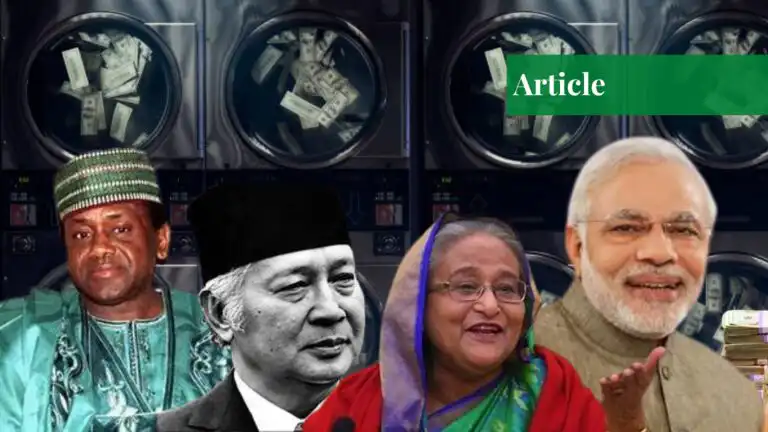
Henceforth, this article focuses on the top most corrupt politicians who have been convicted of corruption and have been reported to be involved in embezzlement, money laundering, extortion, nepotism, kickbacks, fraud, money laundering, etc.
1. Mohamed Suharto (Indonesia)
Mohamed Suharto was an Indonesian military leader who was elected as the second President of Indonesia and assumed office for a record 31 years, from 1967 to 1998. He built his empire upon authoritarian tactics starting with putting down a coup in 1965, then succeeding his predecessor Sukarno in 1967 which eventually culminated in a dead end as mounting protests against his economic policies led to his resignation in 1998.
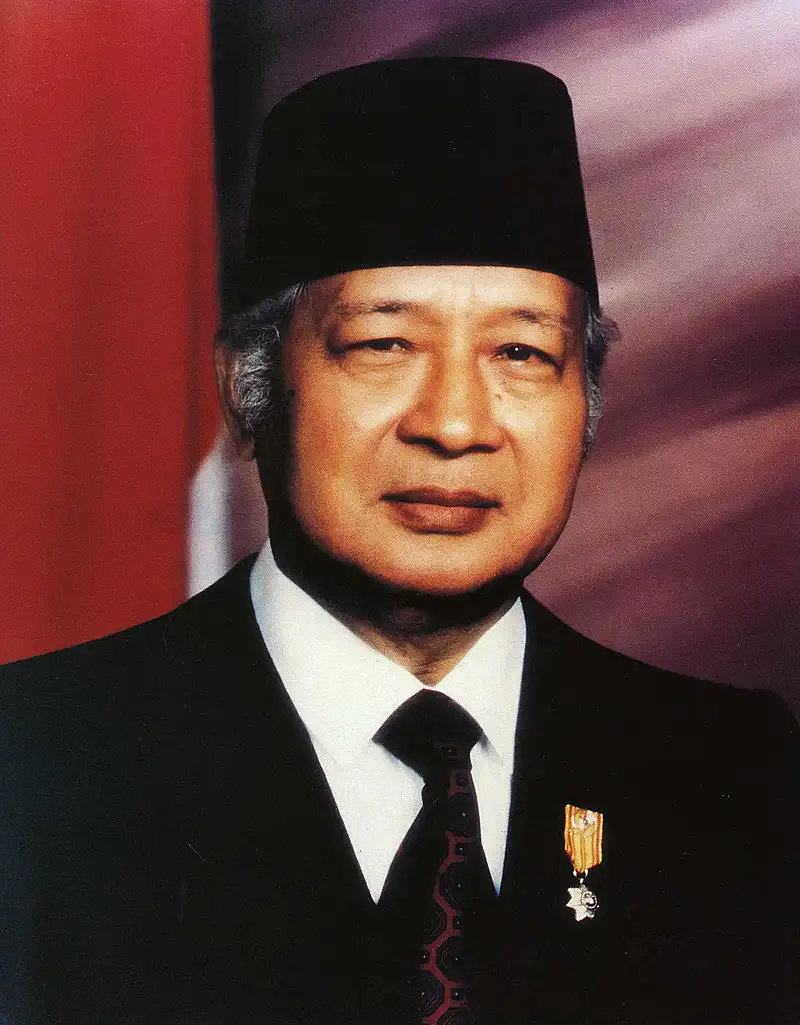
Following his resignation, he was accused of embezzling $571 million in government funds by taking advantage of various charity foundations. Moreover, he was also targeted by multiple lawsuits for the supposed disappearance of scholarship funds worth up to $1.5 billion during his reign. The Indonesian Government even went as far as ordering a private civil action against the Suharto family for the recovery of $307.4 million. Therefore, even after his death, he and his family were considered a main source of corruption.
2. Mobutu Sese Seko (Democratic Republic of Congo)
In the world of kleptocracy, Mobutu Sese Seko is a well-known name. With Western backing, he rose in ranks from being a colonial police officer to the Army Chief and eventually, the President of Zaire (now known as the Democratic Republic of Congo).
His tenure started with a coup in 1965 when he overthrew the elected left-wing leader Patrice Lumumba and installed an autocratic government, symbolized by an archetypical one-party system.
His tales of corruption and nepotism can be remembered in his seizing of national assets (tapping into vast mineral riches) and living a luxurious lifestyle by emptying state coffers on mundane shopping sprees. It has been estimated that he had embezzled around $5 billion in total, thus making him one of the richest world leaders of all time. Mobutu was deposed by a coup in 1997, and later on died in exile in Morocco.
3. Sani Abacha (Nigeria)
Sani Abacha was a former military general, who then became head of state of Nigeria by assuming power in a military coup in 1993. Despite his short reign till 1998, corruption, human rights abuses, and looting of public funds were openly witnessed.
It was publicly acknowledged that he would launder funds from fake government funding projects into his offshore companies. According to some reports, he has been able to embezzle around $2-5 billion, which has impacted Nigerian politics to this day. The money hoarded in foreign countries has been slowly recovered. This can be ascertained through the fact that recently about $311 million from USA and €5.5 million have been recovered from Ireland.
4. Sigmundur David Gunnlaugsson (Iceland)
Sigmundur David Gunnlaugsson, the former Prime Minister of Iceland, and his wife were accused under the aforementioned Panama Papers of having an offshore company called Wintris Inc. located in the British Virgin Islands. The corruption charges maintained that Sigmundur hoarded millions of dollars in these accounts. Adding on, pressure was also mounted on him as he had failed to disclose his assets upon getting elected to parliament in 2009.

The gravity of the situation manifested as the accounts were linked to investments in Icelandic banks that had collapsed upon the onset of the 2008 financial crisis. In the aftermath of the Panama Papers, a public outcry was witnessed which led to Sigmundur officially resigning from his position. He repeatedly denied any wrongdoings but professed that the company was solely established to avoid paying taxes on his wife’s inheritance.
5. Ferdinand Marcos (Philippines)
Ferdinand Marcos was the tenth president of the Philippines who ruled for 10 years, from 1965 to 1986. He declared martial law in 1972 and ruled as a military dictator amid civil unrest caused by a mounting debt crisis from $1 billion to $25 billion. This led to rising unpopularity and coup threats and ultimately to a revolution, forcing Marcos to flee.
Under the allegations of corruption, he was also responsible for stealing around $5 to $10 billion from the Philippines Central Bank. He amassed wealth by receiving payments from private companies, hoarding crates of valuable items such as gold and deposit slips, and taking over large private corporations. Around $4 billion have been recovered but the rest are still unaccounted for.
6. Victor Yanukovych (Ukraine)
Yanukovych, a Russian sympathizer, held the office of prime minister and president from 2002 to 2014. Due to his affiliation with Russia, Victor supposedly angered his anti-Russian populace which led to widespread protests and his ultimate impeachment by the Ukrainian Parliament in 2014. This led to a disclosure of his embezzling activities which indicated that he used public funds and state assets ($1.5 billion) for personal aggrandizement. Moreover, the former President of Ukraine was known to have used up $220 million in state funds to set up a private communication company.
7. Slobodan Milosevic (Serbia And Yugoslavia)
Slobodan Milosevic was a skilled communist apparatchik and a significant figure in the Eastern European and Balkan revolutions in 1989. He first rose to power as the President of Serbia in 1989 and then as the President of Yugoslavia in 1997.
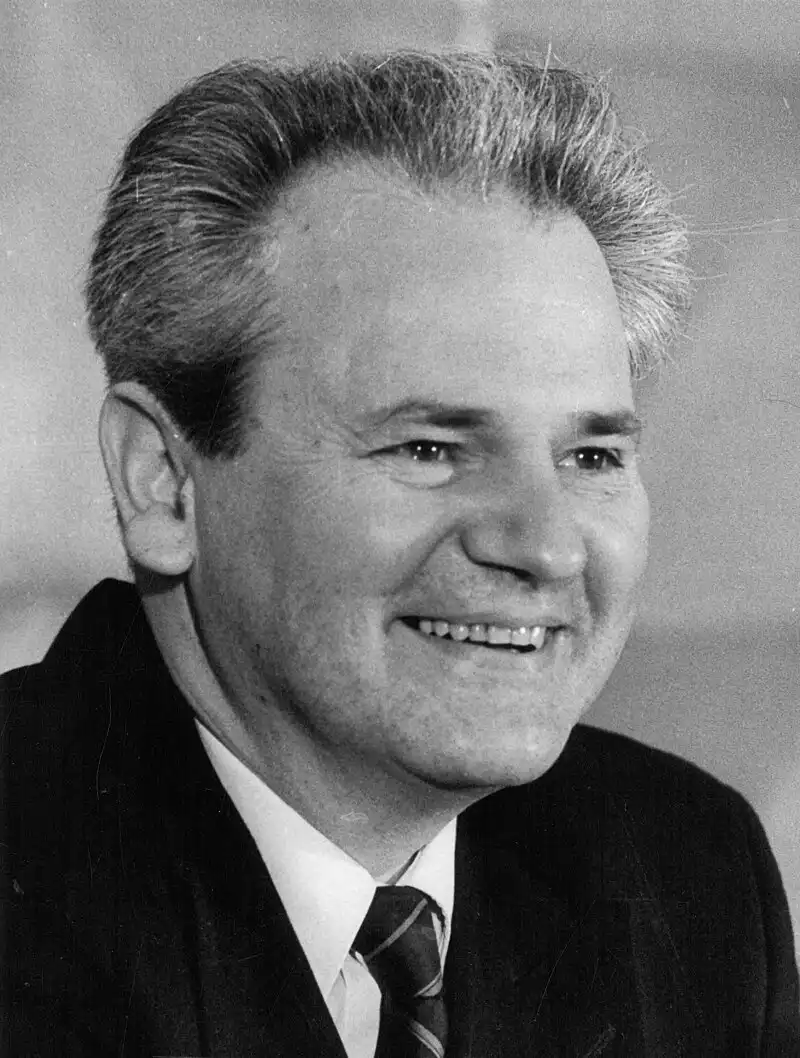
He was apprehended for fomenting ethnic Serb armed aggression across Croatia and Bosnia. Seen as a major participant in the bloody breakup of Yugoslavia, he was tried under the Hague Tribunal for war crimes, bribery, and misappropriation of funds in 2001. Additionally, he was also charged with corruption and abusing his authority. During his political career, he amassed around $1 billion worth of wealth and property.
8. Narendra Modi (India)
Narendra Modi, the still serving Prime Minister of India since 2014, has also been cited for corruption, nepotism, and cronyism. His hatred-infused politics against Muslims has helped his party i.e. the Bharatiya Janata Party (BJP) in garnering support and favoritism from the capitalist lot.
Modi has recently been accused of corruption and misusing his authority in a controversial deal where he bought 36 fighter jets from a French Company called Dassault Aviation. The Congress Party of India has insisted on taking this case under the “Prevention of Corruption Law,” but progress has not been made in this regard.
Overall his corruption saga can be characterized by accepting funds from industrial conglomerates while illegally purchasing lands in the Himalayas.
9. Kim Jong Un (North Korea)
Kim Jong Un is the supreme leader of one of the most secretive and closed-off countries i.e., North Korea. His regime has been severely criticized by the West due to widespread instances of human rights abuses, corruption, and the production of WMDs (weapons of mass destruction).
He has consolidated power through an iron fist rule to stave off any dissent amongst his ranks. Corruption is a recurrent theme among North Korean politicians who have accumulated illegal wealth from the nation’s resources. External investigations indicate that Kim and his family have been involved in illicit activities such as siphoning of state funds and carrying out exorbitant deals through the black market. Therefore, such reports suggest that a lack of transparency is prevalent under his leadership.
10. Petro Poroshenko (Ukraine)
Petro Poroshenko was a former president who served Ukraine from 2014 to 2019. Being a profound conglomerate spanning various industries such as finance and media, he was often criticized for shady financial dealings.
He has been part of several corruption scandals due to reports of him being primarily responsible for ravaging Ukraine’s economy. There were concerns that Petro faced a potential conflict of interest as he was unable to discern between his presidential duties and his business interests. It was revealed that he acquired offshore assets in the Panama Papers in 2016. According to Ukraine’s Accountability Bureau, he has looted around $3 billion, thus gradually structuring his corrupt empire.
11. Jean-Claude Duvalier (Haiti)
Jean Claude Duvalier, a controversial figure, was the forty-first President of Haiti, who ruled the country from 1971 to 1986. His regime was overturned due to anti-government protests which forced him to exile in France. Upon his return to Haiti, he was charged with corruption up until he died in 2014. Overall he was responsible for around $800 million in corruption.
12. Najib Razak (Malaysia)
Najib Razak was a well-known politician in Malaysia before he became prime minister from 2009 to 2018 after which he adopted a hardliner approach in imprisoning his political opponents to discard dissent amongst his ranks.
He has been accused of embezzling money from the Malaysian Sovereign Wealth Fund through the Malaysia Development Berhad Investment Firm. Immediately after facing defeat in the 2018 elections he was apprehended and found guilty by the Malaysian anti-corruption investigators on embezzling $1 billion in assets. Consequently, he was imprisoned for 12 years and fined $45 million.
13. Sheikh Hasina Wajed (Bangladesh)
Sheikh Hasina Wajed of Bangladesh, once a pro-democracy icon is now reduced to an embattled Prime Minister. The daughter of the founding father of Bangladesh, Sheikh Mujibur Rehman took the lead in her father’s stead as the premier of the Awami League Party. Soon she won the election of 1996 and after a brief period of absence, she reclaimed her throne and till now was ruling Bangladesh with an iron fist.
The January 7th, 2024 elections made her Prime Minister for the 5th time, but her success was quickly overshadowed by boycotts, mass arrests, and extra-judicial killing of political opponents. As a political entity used to turmoil and dissent, Hasina did not acknowledge the extent of her mismanagement this time, as viewed through the student protests that toppled her rein once and for all. The demonstrations called for the dissolution of the unfair quota system that assisted the descendants of the 1971 liberation struggle. This unabashed move sparked Hasina’s fury which culminated into violence, killing more than 200 people, most of them students.
Being the longest-serving female prime minister, her rule was marked with authoritarian and corrupt measures, taking key state institutions (judiciary, election commission, media and law enforcement, etc.) in the loop to terrorize opposition forces. In 2001, corruption charges were filed against her for embezzling $122 million in funds and illegally profiting from buying MiG-29 jets.
Subsequently, Sheikh Hasina was arrested for alleged extortion of 80 million taka ($1.36 million) from businessmen in 2007. Notwithstanding, political aids and high-ranking officials were often seen amassing wealth with minimal consequences. Notable amongst them was her former household employee Jahangir Alam who racked up $34 million through bribery while the former army chief, Benazir Ahmed, is under investigation for accumulating illegal wealth. Despite her charades of battling corruption, Sheikh Hasina Wajed was an accomplice in all of these crimes.
In today’s political landscape, corruption is a deeply ingrained issue as it has eroded trust in many politicians, leaders, and institutions. It has weakened democracy and impacted economic growth in various countries.
If you want to submit your articles and/or research papers, please check the Submissions page.
The views and opinions expressed in this article/paper are the author’s own and do not necessarily reflect the editorial position of Paradigm Shift.