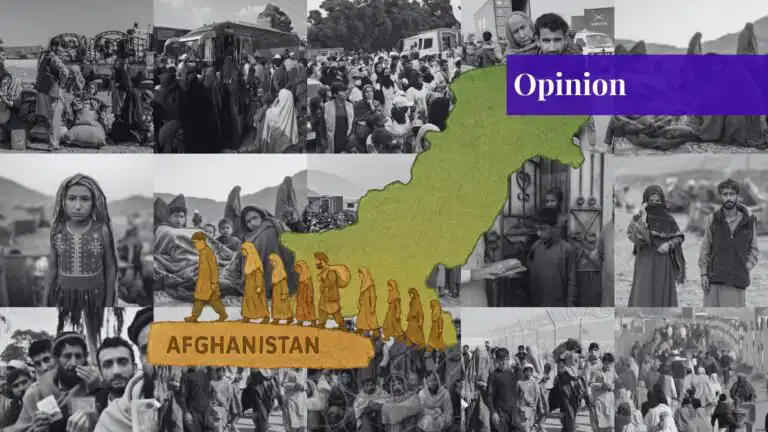
For over four decades, Pakistan has stood as an unintended sanctuary for millions of Afghans escaping war, persecution, and unimaginable loss. Since the Soviet invasion of Afghanistan in 1979, waves of desperate families crossed the border into Pakistan, seeking not opportunity but survival. Moreover, while governments signed papers and borders were redrawn in distant rooms, ordinary people, Afghans and Pakistanis alike, made sense of it on the ground. The repatriation of Afghan refugees from Pakistan will have significant long-term impacts.
A Crisis That Became a Shared Life
Afghans did not arrive in Pakistan by choice. They arrived carrying stories of fathers lost to bombings, mothers killed by landmines, and homes reduced to rubble. The camps that sprang up in Khyber Pakhtunkhwa and Balochistan weren’t places of comfort; they were places of refuge, makeshift towns of tents and tin. Yet, from these hardships, something remarkable happened. Communities were rebuilt. Friendships were formed. Markets bustled. Afghans brought skills, labour, and traditions that quietly wove into Pakistan’s economic and cultural fabric.
In Quetta, areas like Liaquat Bazaar thrived because of Afghan shopkeepers and labourers. In Punjab’s farmlands, they became the invisible hands that kept harvests steady. In Khyber Pakhtunkhwa, Afghan traders and transporters built livelihoods that benefited both sides of the border. They were never simply guests; they became neighbours.
Nevertheless, here we stand. A caretaker government, citing security threats and social pressure, has launched one of the most extensive repatriation efforts in modern South Asian history. However, the rationale doesn’t hold up in data or on the streets, where this decision will land hardest.
Voices from the Margins
It’s one thing to debate policies in conference rooms. It is another way to listen to those whose lives hang in the balance. Consider the words of a young Afghan man working in a scrap shop in Muzaffarabad:
“One night at midnight, the police knocked at our door. They took us to the police station. It was so cold. They only let us go when our shop owner paid bail. This happens often. Because we are Afghan.”
Another refugee recounted how they avoid leaving their camp unless necessary:
“We don’t go outside because of fear. If we must visit the hospital, we will go to Peshawar. Otherwise, we buy what we need from a small bazaar inside the camp.”
These are not the voices of criminals or threats to national security. They are men and women clinging to dignity, earning honest wages, and raising families in a land not their own because their own no longer exists in any recognisable form.
Economic Realities Few Want to Admit
Strip away politics, and the numbers tell their own story. Afghan refugees have filled crucial gaps in Pakistan’s economy. In agriculture, 69% of surveyed Afghan workers labour more than 20 hours a week, often for wages locals refuse to accept. In parts of Khyber Pakhtunkhwa, Afghan entrepreneurs run up to 60% of small businesses.
Their abrupt removal won’t just empty homes and markets; it will cripple the informal sector, which makes up 40% of Pakistan’s GDP. Landowners in Balochistan who rely on Afghan farm labourers now face a crisis of both manpower and trust. Labour shortages will increase wages, lower crop yields, and increase food prices. Inflation, already hovering around 30%, will climb further.
And while some might argue this exodus will free up jobs and housing for locals, it’s not that simple. Property markets rely on stability. Thousands of vacant homes won’t solve the housing crisis; they’ll drag down neighbourhoods, force businesses to shutter, and strain city services already stretched to the breaking point.
Security: The Convenient Excuse
The state’s primary argument for mass deportation is security, which also crumbles under scrutiny. Independent studies, security analysts, and human rights organisations confirm that Afghan refugees do not pose a significant threat. Crime statistics show no meaningful link between refugee populations and rising violence. Militant groups like Tehrik-i-Taliban Pakistan (TTP) and ISIS-Khorasan (ISIS-K) operate from within Pakistan’s borders, not from refugee camps.
Even after months of deportations, terror attacks in places like North Waziristan and Bajaur persist. The problem was never the refugees — it’s the homegrown extremist networks long embedded in Pakistan’s neglected tribal and border regions.
And then there’s the matter of geography. The 2,600-kilometre border between Pakistan and Afghanistan is rugged, porous, and nearly impossible to police fully. Mass expulsions do little to address the real, systemic issues in Pakistan’s security apparatus.
A Decision That Weakens Us All
What’s being overlooked is the message this sends. To forcibly displace people who have called Pakistan home for decades is to deny the shared humanity that saw this nation open its borders in the first place. It alienates communities that have lived in peace and makes future cooperation with Kabul, which is already strained, even more difficult. Pakistan’s borders with the other neighbouring countries, i.e., India and Iran, also remain sensitive. Instigating fresh conflict along the Afghan frontier for marginal, unproven security gains is reckless. Diplomacy, not deportation, is the path to regional stability.
A Better, Braver Way Forward
No country can host refugees indefinitely, and Pakistan is not obligated to shoulder this burden alone. However, managing migration humanely, thoughtfully, and in partnership with international agencies is not only possible but also in Pakistan’s best interest. A phased, rights-based approach, legal protections for long-term residents, and economic integration programs would safeguard refugee and national interests.
These people are not just numbers on a ledger or problems to be managed. They are mothers, farmers, shopkeepers, and children born on Pakistani soil who have known no other home. As one male refugee, aged between 24 and 30, put it:
“We feel embarrassed. The police disrespect us. But still, we stay quiet. We are just trying to live.”
Pakistan must decide what kind of nation it wants to be — one that honours its history of hospitality and resilience or sacrifices its values for short-term political optics.
The choice is ours, and history will remember it!
If you want to submit your articles and/or research papers, please visit the Submissions page.
To stay updated with the latest jobs, CSS news, internships, scholarships, and current affairs articles, join our Community Forum!
The views and opinions expressed in this article/paper are the author’s own and do not necessarily reflect the editorial position of Paradigm Shift.

Malaika Khan is pursuing a BS in Economics at the National University of Sciences and Technology, building a strong foundation in economic theory and applied policy. Her commitment to driving positive social change is reflected in her active participation with Women2Women Pakistan and the Young Leaders Conference (YLC). Beyond academics, she has gained professional experience across startups, government bodies, and non-governmental organizations, equipping her with essential real-world insights. Malaika aspires to make her research and policy work accessible in the public domain to influence meaningful societal impact.