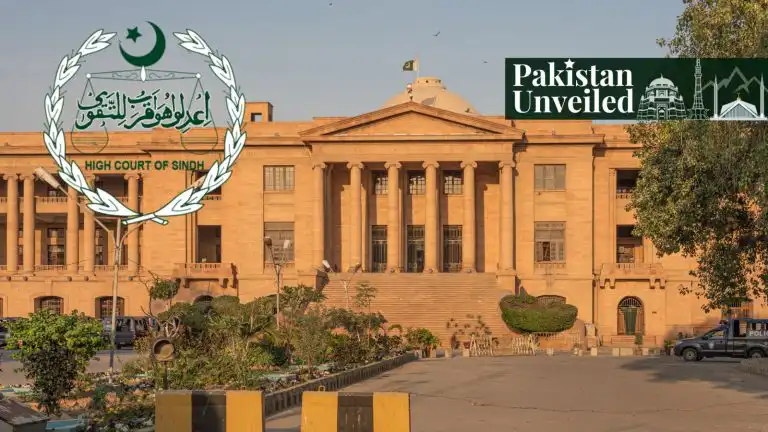
The Sindh High Court is one of the most vital judicial bodies in Pakistan. It plays an integral part in the safeguarding of the Constitution, the settlement of legal conflicts & delivering justice to the people. From constitutional entries to civil & criminal appeals, the court considers a variety of applications concerning persons, companies & government organizations.
Often you may hear of the Sindh High Court in the newspapers or on television and not know what it is or what its powers are. If you are a student, lawyer, researcher, or party in a matter coming before the said court, it is always beneficial to know about how the court functions.
Here is a complete guide to the Sindh High Court, its history, structure, jurisdiction, benches & how it functions in a simple and user-friendly manner.
What Is the Sindh High Court?
The highest court in the province of Sindh is the Sindh High Court. It functions as the highest court for the province and is governed by the Pakistani Constitution.
The court considers appeals from tribunals and subordinate courts. It also has the power to examine decisions made by public servants and government agencies. The court assists in defending people’s legal rights by using its constitutional authority.
While circuit benches function in other locations to facilitate easier access to justice, the Sindh High Court’s main seat is in Karachi.
History of the Sindh High Court
The British colonial era is where the Sindh High Court got its start. Before the establishment of Pakistan, the region’s judicial issues were governed by many legal frameworks created by British authority.
Pakistan’s legal system had several modifications following its independence in 1947. The Sindh High Court finally replaced the Sindh Chief Court.
The court’s activities grew in time to accommodate the demands of an expanding populace. Modern court processes were adopted along with the establishment of new benches. It is currently one of Pakistan’s busiest and most reputable courts.
The court has contributed significantly to the preservation of basic rights, public interest litigation & constitutional evolution.
Where Is the Sindh High Court Located?
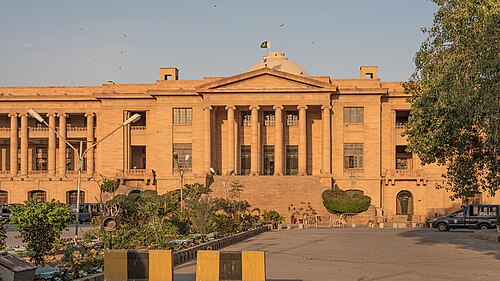
The principal seat of the Sindh High Court is situated in Karachi. The building is known for its historical and architectural significance.
To improve access to justice for people living outside Karachi, the court also operates circuit benches in different regions of Sindh.
Major benches include
- Karachi Principal Seat
- Hyderabad Bench
- Sukkur Bench
- Larkana Circuit Court
These benches allow litigants to pursue their cases without traveling long distances.
What Is the Jurisdiction of the Sindh High Court?
Jurisdiction refers to the legal authority of a court to hear and decide cases.
The Sindh High Court exercises several types of jurisdiction.
Original Jurisdiction
In certain matters, a case can be filed directly before the High Court without first going to a lower court.
These matters may include
- Constitutional petitions
- Fundamental rights cases
- Public interest matters
- Certain company & commercial disputes
Appellate Jurisdiction
The court hears appeals against decisions made by subordinate courts.
These may include
- Civil appeals
- Criminal appeals
- Family law appeals
- Tax and revenue matters
Constitutional Jurisdiction
One of the court’s most important powers is its constitutional jurisdiction.
Citizens can approach the court if they believe a public authority has violated their constitutional rights.
The court can issue directions to government departments and public officials when necessary.
Supervisory Jurisdiction
The Sindh High Court supervises lower courts throughout the province.
This authority helps maintain legal standards and judicial discipline across Sindh.
Structure of the Sindh High Court
The court operates through a well-defined structure designed to handle thousands of cases every year.
Chief Justice
The chief justice is the head of the Sindh High Court.
Responsibilities include
- Administrative supervision
- Allocation of cases
- Formation of benches
- Judicial leadership
The chief justice plays a key role in ensuring smooth court operations.
Judges
The court consists of multiple judges appointed in accordance with constitutional procedures.
Judges hear cases individually or as part of larger benches depending on the nature of the matter.
Court Staff
The judicial system also relies on
- Registrars
- Deputy registrars
- Court clerks
- Administrative officers
- Research staff
These officials help manage case records and court proceedings.
Types of Cases Heard by the Sindh High Court
The Sindh High Court deals with a wide variety of legal matters.
Civil Cases
Civil disputes commonly involve the following
- Property issues
- Contract disputes
- Commercial disagreements
- Inheritance matters
Criminal Cases
The court hears appeals and petitions for review related to criminal convictions and sentences.
Cases may involve
- Murder trials
- Financial crimes
- Drug-related offenses
- Anti-corruption matters
Family Matters
Family disputes can reach the High Court through appeals.
These may include
- Child custody issues
- Guardianship matters
- Family property disputes
Constitutional Cases
Many citizens file constitutional petitions when they believe government actions have violated their legal rights.
These cases frequently attract public attention because they usually involve important constitutional questions.
How Are Judges Appointed?
Judges of the Sindh High Court are appointed by a constitutional process.
The Judicial Commission of Pakistan plays an important role in recommending appointments.
The Parliamentary Committee reviews nominations in accordance with constitutional requirements.
Appointments are made based on legal qualifications, professional experience, and judicial competence.
This process helps maintain judicial independence and integrity.
Importance of the Sindh High Court
The Sindh High Court acts as a cornerstone of the legal system.
Its importance is evident in several areas.
Protection of Fundamental Rights
Citizens can seek protection when their constitutional rights are threatened.
Accountability of Public Authorities
Government departments are subject to judicial review.
This helps strengthen transparency and lawful governance.
Legal Development
Court judgments contribute to the interpretation and development of Pakistani law.
Public Confidence
An independent judiciary helps build trust in the legal system.
Online Services and Digital Facilities
The Sindh High Court has gradually introduced modern technology to improve accessibility.
Many legal services are now available online.
These include
- Cause lists
- Case status information
- Judgment access
- Case management systems
- Court notices
Digital services help lawyers and litigants stay informed without frequent court visits.
How to Check Case Status
People involved in legal proceedings often want updates regarding their cases.
Case information can usually be accessed through official court resources.
Users may search using
- Case number
- Party name
- Advocate details
- Filing information
This saves time and improves public access to judicial information.
Role of Lawyers in the High Court
Advocates play a critical role in High Court proceedings.
Their responsibilities include
- Preparing legal arguments
- Filing petitions
- Presenting evidence
- Representing clients before judges
Only qualified advocates with appropriate legal standing can appear before the High Court.
Experienced legal representation can be important in complex cases.
Challenges Faced by the Sindh High Court
Like many judicial institutions around the world, the court faces several challenges.
Case Backlogs
A growing population and increasing litigation result in a large number of pending cases.
Resource Demands
Expanding judicial infrastructure requires continuous investment.
Technological Modernization
Courts must continue adapting to modern legal technologies and digital systems.
Public Awareness
Many citizens remain unfamiliar with legal procedures and court processes.
Efforts to improve legal education can help address this challenge.
Recent Developments in the Judicial System
Pakistan’s judiciary continues to adopt reforms aimed at improving efficiency and transparency.
Important developments include
- Digital case management
- Online publication of judgments
- Improved court administration
- Enhanced public access to information
These changes aim to make justice more accessible & efficient for everyone.
Why the Sindh High Court Matters to Citizens
For ordinary citizens, the High Court serves as a safeguard against unlawful actions & unfair treatment.
The court offers a forum where individuals can seek legal remedies when lower courts or public authorities fail to address their concerns.
Its decisions affect many areas of daily life, like
- Property rights
- Business activities
- Employment matters
- Education issues
- Public administration
Because of this broad influence, the court remains a vital institution in Sindh and throughout Pakistan.
FAQs
Yes, if a person’s constitutional or fundamental rights are affected by a public authority, a constitutional petition may be filed directly before the court.
No, the court interprets and applies existing laws. Lawmaking is the responsibility of Parliament and provincial legislatures.
Yes, decisions of the Sindh High Court are generally binding on subordinate courts in the province u005cu0026amp; guide future legal proceedings.
If you want to submit your articles and/or research papers, please visit the Submissions page.
To stay updated with the latest jobs, CSS news, internships, scholarships, and current affairs articles, join our Community Forum!
The views and opinions expressed in this article/paper are the author’s own and do not necessarily reflect the editorial position of Paradigm Shift.

Paradigm Shift is an official staff account.