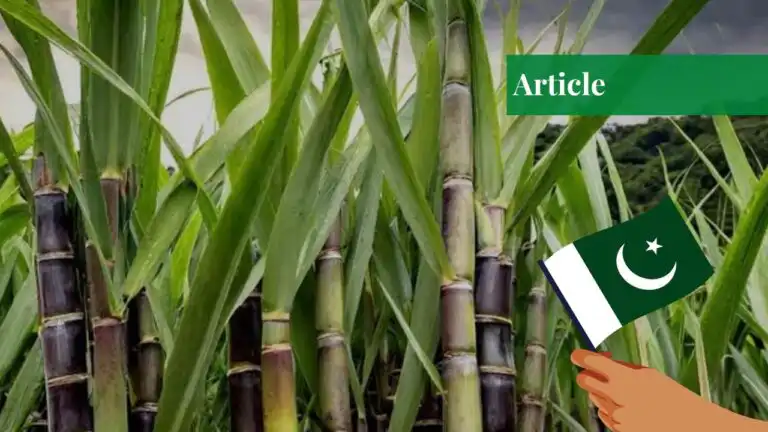
Sugarcane is a crop of international significance cultivated in over one hundred and twenty-five countries. Sugarcane is the primary feedstock for several products, such as sugar, bio-energy, or ethanol. When it comes to sugarcane production, Pakistan has a disadvantage because its industry has several weaknesses. Analysing Pakistan against the other lead sugarcane industries, namely Brazil, India, China, and Thailand, offers strengths, weaknesses, and prospects for Pakistani improvement in the sugarcane areas.

Top Producers in the Global Sugarcane Industry
Brazil
Currently, Brazil leads the production of sugarcane, which accounts for 40% of the world’s sugar. In addition to sugar, it boasts an industry of advanced bioethanol borne out of the country’s biofuels sector. Brazilian sugar mills are mostly capitalized, and the country tends to use bagasse, the residual sugarcane, for energy generation.
India
The second-largest producer, India, relies on its own demand and consumption more than any other country in the world. However, problems with the lack of efficiency and government bureaucracy still hinder its development in the global sugar market. Yet, India maintains its strong market position and is striving to achieve technological advances in its production.
China
As the world’s largest sugar consumer and increasing producer of ethanol as part of its bioenergy plan, China is emerging as a significant player in the sugarcane sector.
Thailand
As a leading exporter of sugar and sugar by-products, Thailand has several strengths due to its efficient and quality sugar production. Its large-scale production technology and export-focused development strategies place it in a strong position in world markets.
Pakistan
Among the ten leading producers of sugarcane, Pakistan faces issues with fairly high production costs, old milling technologies, and improper water utilization. The country uses sugar mostly for its internal consumption and has limited ability to challenge international producers, especially in exporting this product.
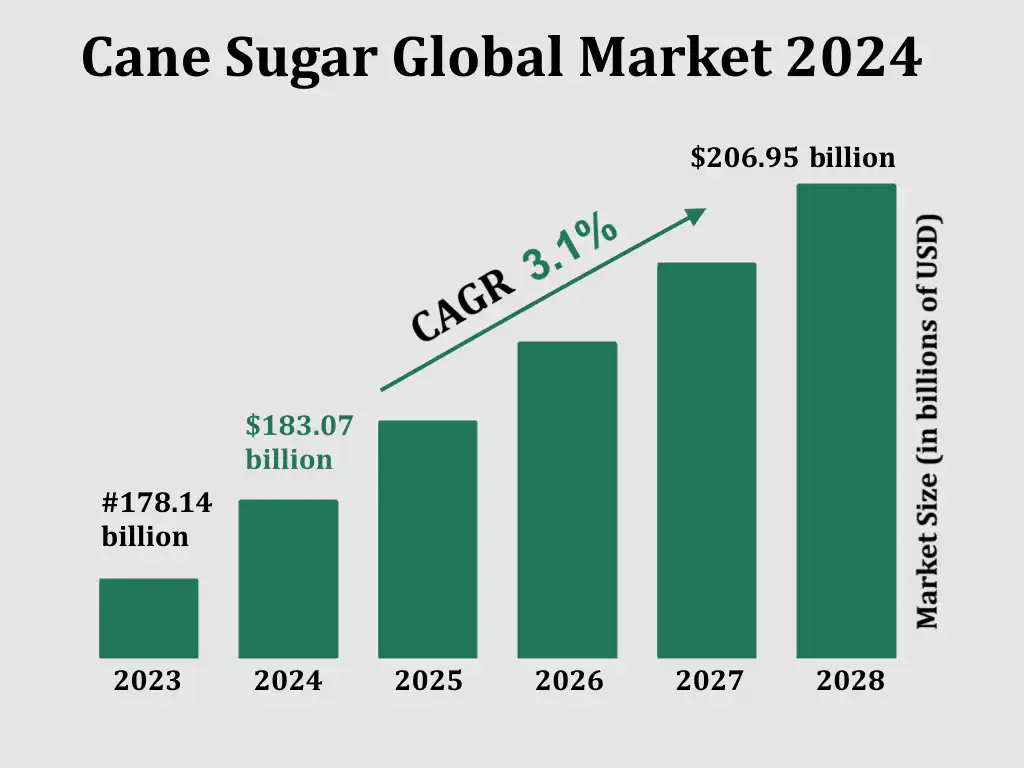
Key Metrics (2024)
Production Efficiency
Brazil leads in yield per hectare, producing 80-90 tonnes of sugarcane per hectare, far surpassing Pakistan’s 50-60 tonnes per hectare. This gap gives a guess about the high level of mechanization and effective farming practices in Brazil. Other countries such as India and Thailand also produce a higher yield per hectare than Pakistan; only that their figures are not as high as Brazil’s.
Export Contribution
Brazil and Thailand produce 50 percent of the total sugar export, though Pakistan has export potential, but the emphasis is on local consumption. Pakistan’s sugar market is primarily geared towards fulfilling local demand, leaving little surplus for export.
Technological Adoption
Developed nations such as Brazil and Australia are utilizing cutting-edge technologies, including precision farming, automated systems, and advanced irrigation practices, which put them ahead of Pakistan. Therefore, Pakistan still uses traditional practices for the production of sugarcane, particularly for farming and milling, which restrain yielding capacity.
Sugarcane Production in Pakistan
Strengths
- Climatic Suitability: Once again, Pakistan has a constructive climate for most of the crops in specific options, such as Punjab & Sindh, which is the mass-producing land of sugarcane. These regions wash with a lot of sunshine and moderate temperatures in which they can grow their sugarcane.
- Labour Force: The sugarcane industry in Pakistan has a vast rural labor force involved, right from farming to value addition to ancillary services. This, if updated, holds great potential for growth.
- Land Availability: For sugarcane development, Pakistan has a large capacity of cultivable land that can be used for expanding this crop. Still, this potential is possible to achieve only in the case of eliminating the inefficiencies in the production chain.
Weaknesses
- Low Yield per Hectare: Pakistan’s per-hectare yields are far below the world’s best producers, like Brazil, which gives 80-90 tonnes of sugarcane per hectare. Pakistan still has low yields at 50–60 qtls per hectare, showing that there is still much improvement that needs to be made in farming practices.
- Water Management: Low yielding is another problem in Pakistan due to its reliance on aged canal irrigation systems and orders utilization of water supplies. This is true given the high incidence of water wastage, especially at a time when water supply is becoming a scarce resource in the region.
- Outdated Machinery: Energy losses exist in the sugar mills of Pakistan as most of them make use of outdated machinery. This inefficiency leads to an increase in expenses and, consequently, a decrease in revenues for mill owners.
- Over-reliance on Subsidies: The overall market of the sugar industry in the context of Pakistan totally relies on subsidies from the government. These subsidies interfere with the market, thus hindering the sugar mills from reinvesting in this area and boosting modernization and consequently efficiency.
Products Derived from Sugarcane
Sugar
As a result, Pakistan makes sugar mainly for its population’s consumption but is not competitive in the international market for this product. In contrast, Brazil generates sugar with way less cost through mechanisation and best practices. Thai companies particularly excel in their production method and exportation of sugar since Thailand is a leading exporter of the product.
Molasses
High on the list of exported goods is molasses, which is a by-product of sugaring and is usually shipped in its raw form by Pakistan without much refinement. This leads to the creation of a gap where valuable addition is not made to the product. On the other hand, Brazil uses most of its molasses to produce ethanol, which is advantageous to Brazil since it enhances its energy security and decreases vulnerability to fossil fuels.
Bagasse
Cane trash, or bagasse, which is another biomass available from sugarcane, has great potential for bioenergy production. Pakistan, in contrast, preserves a very low figure of using bagasse in its efficient ways, like power generation, which is seen in countries like Brazil and India and even in paper-making.
Chemicals
Currently, there are few chemical processing plants, exclusively for extracting the valuable chemicals present in sugarcane products. Firms in countries such as India and the United States have, however, evolved industries that obtain useful products like citric acid and acetic acid from sugarcane. This sector is still in its infancy in Pakistan.
Fertilizers
Press mud, another raw material arising from sugar mills and which can be used to manufacture organic fertilizers, has not been exploited in Pakistan to its full potential. Sugar production industries in well-developed countries like Brazil and Australia have proper systems to utilize all by-products, including fertilizer, which are helpful to improve soil condition and also lessen the effect on the environment.
If you want to submit your articles and/or research papers, please check the Submissions page.
The views and opinions expressed in this article/paper are the author’s own and do not necessarily reflect the editorial position of Paradigm Shift.

Syed Salman Mehdi is a seasoned freelance writer and investigative journalist with a strong foundation in IT and software technology. Renowned for his in-depth explorations of governance, regional conflicts, and socio-political transformations, he focuses on South Asia and the Middle East. Salman’s rigorous research and unflinching analysis have earned him bylines in esteemed international platforms such as Global Voices, CounterPunch, Dissident Voice, Tolerance Canada, and Paradigm Shift. Blending technical expertise with a relentless pursuit of truth, he brings a sharp, critical perspective to today’s most pressing geopolitical narratives.