Any student of history would point out that seemingly shortsighted goals usually lead to catastrophic long-term effects. At the time, the actions may have seemed tactically and strategically instrumental to start wearing under the weight of hindsight. This sums up the relationship between Pakistan and the Afghan Taliban. The Pakistani government has spent decades propping up the Taliban in hopes of weakening American influence in the region and swaying Afghanistan into their fold. This policy can be likened to training a rabid attack dog and hoping it doesn’t attack you after it’s done maiming your enemies. Given the heavy border clashes and Islamabad’s surgical strikes within Afghani territory, I guess we can call time of death on the policy.
Old friends Turned Bitter Rivals
Afghanistan and Pakistan have had a naturally antagonistic relationship for most of their modern history. Like many problems of the subcontinent, they can be traced back to the British. The Durand Line was established in 1893 as the international border between the Emirate of Afghanistan and the British Raj by namesake Mortimer Durand (a British diplomat) and the Emir of Afghanistan, to fix the limit of their respective spheres of influence and improve diplomatic relations and trade.
This border line was of particular contention for Kabul since it severed a significant portion of Pashtuns from Afghanistan’s territory; though they were able to fight for their independence in the Third Anglo-Afghan War, in exchange they had to cement the validity of the Durand line at the Treaty of Rawalpindi. Regimes changed, and the British Raj’s problem became Pakistan’s problem. An already fragile nation rife with separatist movements, Afghanistan placing claims on an entire province, became an existential crisis for the Pakistani government.
With Afghanistan to the west and India to the east, a dreaded two-front war had to be prevented. So, the Pakistani government decided their best course of action would be to neutralize or even secure power in Afghanistan; a friendly Afghanistan would quell separatist movements in KPK, help stop insurgents, and provide a path to develop relations with central Asian nations. The Taliban were poised as natural allies for the Pakistani government. Instead of the regular government’s ambitions to regain ethnic lands, the more fundamentalist Taliban would focus on Islamic nationalism—a fact Islamabad believed would prevent separatism and insurgencies.
During the American invasion following 9/11, Pakistan played a dual role in helping America while simultaneously propping up its enemy. This dual approach allowed Pakistan to secure over $32 billion in direct aid from the US. President Musharaf and other generals in Pakistan, at the very least, kept their promises to the Taliban while continuing to deceive Afghans and the United States for over two decades.
The Pakistani Inter-Services Intelligence (ISI) agency has supported the Taliban from as early as their inception with money, training, and weaponry. But even a friendly Taliban government from 1996 to 2001 under Mullah Omar, despite perceived rapport with Pakistan, had refused to grant recognition to Durand Line.
Given the support, Islamabad welcomed a Taliban takeover since it believed it would return the favor and help it stop its major rival, the TTP (Tehreek-e-Taliban), an insurgent group that has waged a brutal war against the government. The TTP has pockets of influence in rural Pakistan and is increasingly targeting Pakistan’s security forces and strategic projects like CPEC. The Taliban has, much to the annoyance of Islamabad, claimed an independent foreign policy not managed by Islamabad.
Given their lack of inaction and reports of harboring terrorists, Islamabad greenlit the bombardment by Pakistani military aircraft in Afghanistan’s eastern Paktika province on the 25th of December. According to the Taliban, this led to the deaths of at least 46 people, most of whom were children and women. This escalation led to the general border skirmishes between the two nations.
The Wakhan Corridor
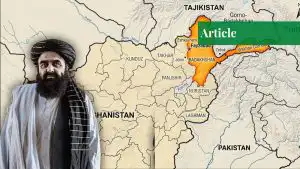
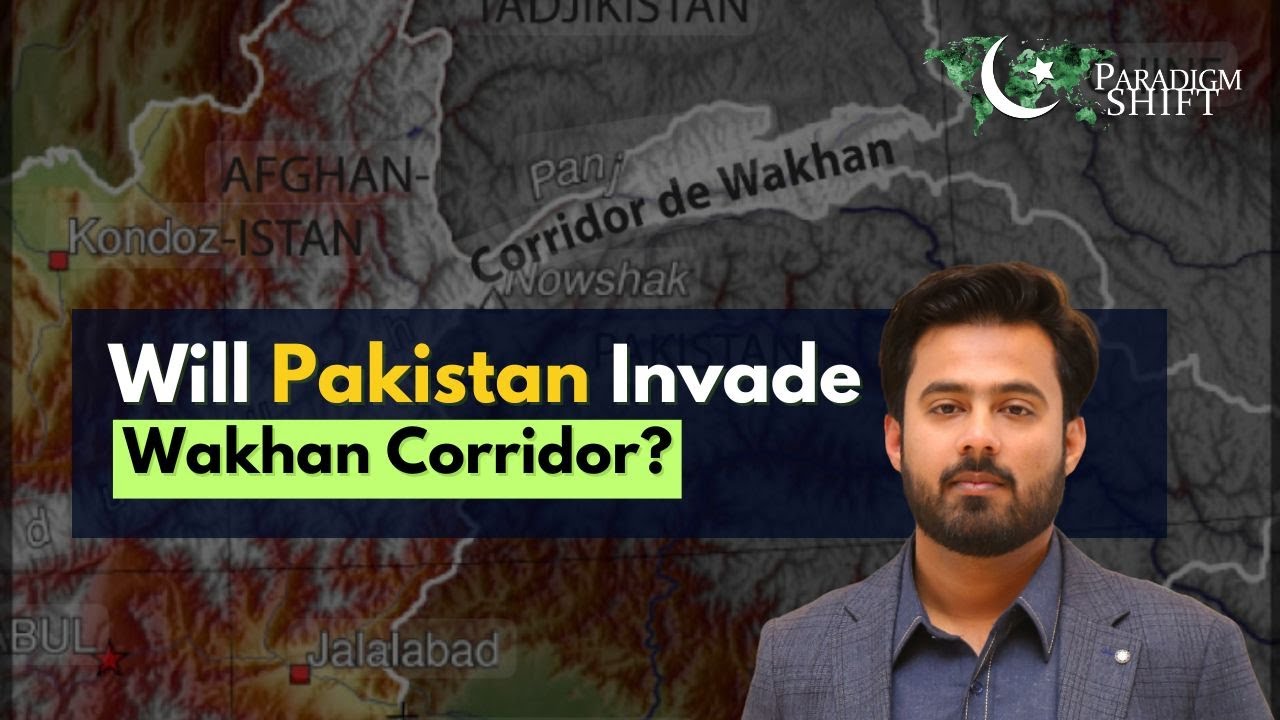
As a result of the border skirmishes, some reports claim that Pakistan is willing and ready to capture the Wakhan Corridor, which is a narrow strip of land only 350 km long and 34 km wide, found at the very edge of Afghanistan’s Badakhshan province. The Wakhan Corridor was also formalized during the Durand Line Agreement as a way to create a buffer between the British and Russian empires.
The corridor holds only 12,000 people but proves to be of significant importance for Pakistan. Firstly, it could serve as a link between Pakistan and Central Asia, most importantly with Tajikistan since they would have a direct land border. More importantly, the region would be vital to CPEC and the interests of the Chinese, who would rather work with Islamabad than Kabul.
Hypothetically speaking, seizing and annexing land from Afghanistan is possible; it is a pariah state with limited international recognition, so not many nations would come for its aid. There may be condemnations and pressure to de-escalate, but it is still politically feasible. What can’t be quantified is the resulting war with Afghanistan. If the Taliban are hostile now, their aggression would increase tenfold given an illegal seizure and annexation of part of their territory.
The Graveyard of Empires has been a master of guerrilla and asymmetric warfare dating back to its victories in the Anglo-Afghan wars. But guerrilla warfare seems more adept for a defensive war rather than an offensive one, leveraging the rugged terrain to even the technological odds.
However, the rushed withdrawal of American forces has left, according to the US Department of Defense, around $7 billion in US military equipment in Afghanistan, including over 78 aircraft, 12,000 Humvees, 42,000 trucks, and 350,000 rifles. Some claim it could have been an intentional act possibly to counter Pakistani influence in the region or become casus belli for a second incursion into Afghanistan, though these still remain as speculations.
The US spent an estimated $2.3 trillion to fight in Afghanistan, in what became known as a “forever war.” Almost 2,500 US military personnel were killed there. Though not as robust as the Pakistani arsenal or armed forces, which are ranked in the top ten strongest armies in the world, the Afghan army is ranked 118. That aside, higher ranks weren’t able to prevent the defeat of the USSR or the USA. Occupation of Afghan territory, particularly the Wakhan Corridor, is notoriously difficult and will lead to intense border clashes and unrestricted support for the TTP and other terrorist groups in Pakistan. With posturing towards India, Kabul could also secure a lifeline and place the squeeze on Pakistan. But these are all hypothetical; currently, the fighting has been contained as only border skirmishes.
Conclusion
Given the history of the Taliban and its bipolar relationship with Islamabad, the government should plan to reshape policy towards the Afghani Taliban. There is the National Resistance Front in the north of Afghanistan headed by Ahmad Masoud that can be supported to weaken the regime, or a diplomatic decision can be made to keep Pakistan’s western border safe. Islamabad needs to be firm but not overly aggressive to prevent the Taliban from posturing towards Delhi.
If you want to submit your articles and/or research papers, please check the Submissions page.
The views and opinions expressed in this article/paper are the author’s own and do not necessarily reflect the editorial position of Paradigm Shift.

The author is studying Economics at the National University of Science and Technology (NUST) with a keen interest in financial affairs, international relations, and geo-politics.