“There is no tool for development more effective than the empowerment of women.”
Kofi Annan
Pakistan’s OIC Moment and the Gap at Home
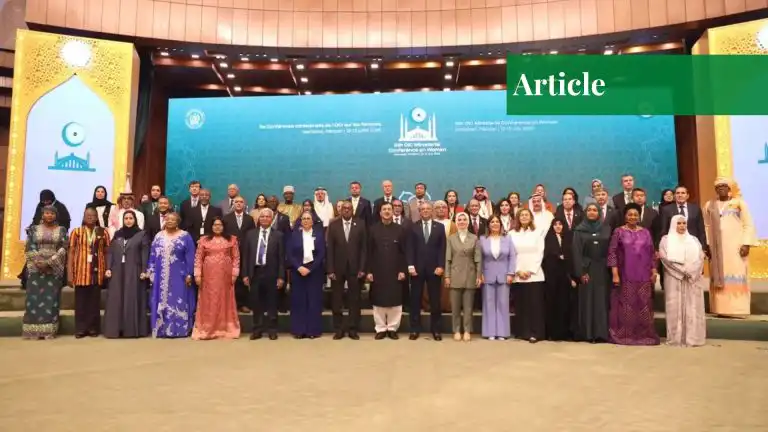
Pakistan’s hosting of the 9th Organization of Islamic Cooperation (OIC) Ministerial Conference on Women in Islamabad on July 12–13, 2026, was framed as a landmark in the Muslim world’s conversation on women’s empowerment. The conference concluded with the Islamabad Declaration on Women’s Empowerment, which stressed women’s education, economic participation, leadership, and protection from violence. But the timing exposed a difficult contradiction: in the first six months of 2026, Pakistan recorded 3,172 gender-based violence cases. That contradiction is the story. Pakistan can lead an international conference on women’s rights, but its credibility depends on whether it can protect women in its own society.
The Conference Agenda
Islamabad Declaration
The OIC declaration emphasized interdependence among member states and called for practical cooperation on women’s empowerment. It highlighted girls’ education, access to employment, financial inclusion, digital literacy, and stronger measures against violence and harassment. This was not just symbolic language; it was a roadmap for policy action across OIC states.
Pakistan’s Position
Pakistan used the conference to project itself as a serious actor on women’s issues. Officials described women’s empowerment as a constitutional and national priority and highlighted programs such as the Benazir Income Support Program and Waseela-e-Taleem. The government also stressed digital inclusion and entrepreneurship as tools for expanding women’s participation in public life. But leadership comes with accountability. A host country that promotes women’s empowerment internationally must also confront its domestic shortcomings with equal seriousness.
The Violence Women Face
| Type of Violence | Reported Cases |
|---|---|
| Murders | 644 |
| Torture | 514 |
| Abductions | 462 |
| Suicides | 363 |
| Rape | 280 |
| Injuries | 175 |
| Honour killings | 132 |
| Region | Share of Reported Cases |
|---|---|
| Punjab | 74% |
| Sindh | 17% |
| Khyber Pakhtunkhwa | 6% |
| Balochistan, Islamabad, AJK and Gilgit-Baltistan | 3% |
Pakistan’s Legal Framework
Existing Laws
Pakistan has built a significant legal framework for women’s protection over the years. UN Women notes that Pakistan’s normative legal system includes laws against rape, domestic violence, sexual harassment, forced marriage, deprivation of inheritance, and harmful practices such as exchanging women to settle disputes.
To strengthen women’s rights, the government has introduced laws such as the Protection Against Harassment of Women at the Workplace Act, the Protection of Women Against Violence Act, and the Anti-Rape framework. In 2026, another important reform, the Domestic Violence (Prevention and Protection) Bill, was approved by the government again to stop domestic abuse and protect all men, women, older people, children, transgender persons, and persons with disabilities living in the same household. This law recognizes physical, emotional, psychological, and economic abuse as offensive and provides protections and shelters to victims.
The Implementation Problem
The main problem is not the lack of laws but their weak enforcement. The reported cases were 28,059 GBV cases decided at trial in courts in one recent period; 26,842 ended in acquittals, and only 1,217 resulted in convictions on merit, with the overall conviction rate around 5 percent. That is a devastating figure, reflecting that women may report violence and abuses, but the system has failed to punish offenders and ensure justice.
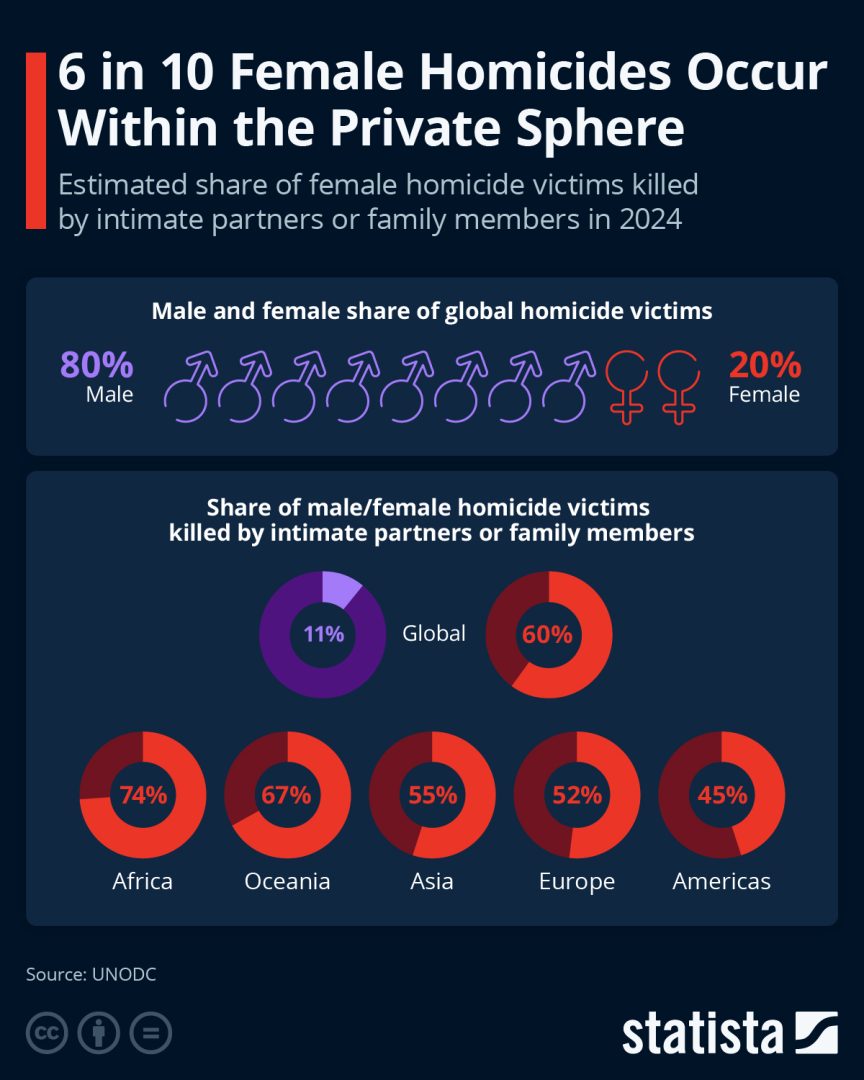
Women’s political representation remains low. As per the Feb 2024 elections, only 20.6% of seats are occupied by women, reflecting their lower contribution in political decision-making. Further, this report shows women aged 15–49 reported experiencing domestic physical and sexual violence by their spouses. While 18.3% of women aged 22-24 were married before the age of 18. These statistics reveal the continued intertwining of early marriage, violence, and poor political representation.
World Bank and WEF Benchmarks
Pakistan was ranked last among 148 countries in the World Economic Forum’s Global Gender Gap Report 2025, with a parity score of 56.7 percent. Pakistan’s ranking is indicative of deep deficits in economic participation, education, health and political empowerment. These are not abstract numbers. They are a measure of how far Pakistan still has to go.
What Needs to Change
Pakistan’s women’s empowerment agenda will remain incomplete unless it moves from promises to enforcement. The country already has laws on harassment, rape, domestic violence, and anti-women practices, but the real problem is implementation.
Stronger Law Enforcement
Laws must be enforced effectively. This requires joint efforts by police, courts, and prosecutors. Mostly, victims face delayed justice, weak investigation, and experience pressures from society to drop their cases. Thus, the lack of proper support services discourages victims from seeking justice and recovering from violence. To avoid these hurdles, strong laws alone are not enough. The government should also provide education, legal aid, safe shelters, and mental health support for survivors.
Economic Security for Women
Similarly, economic independence strengthens security and provides self-reliance for women. Limited access to financial resources, inheritance rights, employment, or education can trap women in this violence and make them less able to escape abusive relationships. Besides financial support, the government has to empower women by expanding social protection programmes that strengthen women. Such as BISP and Waseela-e-Taleem that teach, train new skills, provide employment, and develop digital literacy.
Breaking Patriarchal Norms
Pakistan must reject practices and norms that normalize violence against women and discourage victims from reporting. The solution is not simply legal reforms, but the government has implemented them too. The contribution of families, schools, communities, and the media has to promote equality and reject violence, which is a difficult part, reflected in many indicators that social attitudes and limited public awareness remain major barriers to women’s rights.
Strengthening Data and Accountability
Finally, the policies and their implementation at ground level demand regular monitoring and assessment. Better and more accurate statistics of complaints, convictions, shelters, and support services are essential for identifying gaps and improving the legal protection system.
Conclusion
Pakistan’s OIC Women’s Conference was an important diplomatic moment, but its real value will be judged by what changes afterward. The women’s safety remains a crisis, not a side issue. The true test of Pakistan’s leadership is whether women in Lahore, Karachi, Vehari, Quetta, or rural Sindh can live without fear, seek justice without humiliation, and pursue opportunity without discrimination. Until that happens, empowerment will remain a promise, not a reality.
If you want to submit your articles and/or research papers, please visit the Submissions page.
To stay updated with the latest jobs, CSS news, internships, scholarships, and current affairs articles, join our Community Forum!
The views and opinions expressed in this article/paper are the author’s own and do not necessarily reflect the editorial position of Paradigm Shift.
Mahnoor Gujjar is a student of English literature and linguistics at the National University of Modern Languages (NUML), Hyderabad Campus.