A Historic Meeting in Alaska: Setting the Stage for Peace
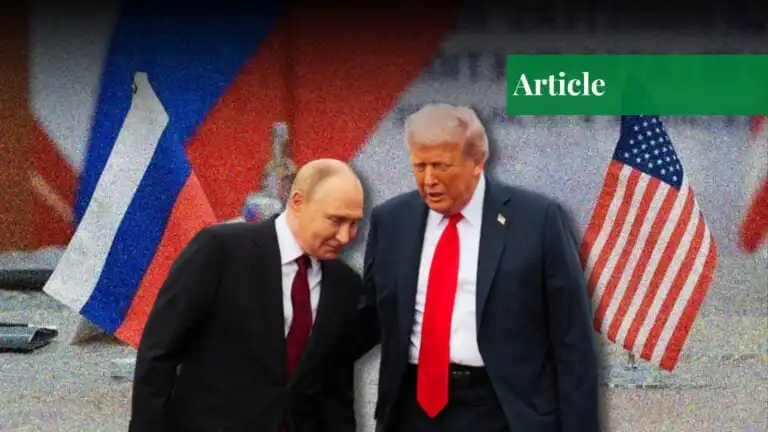
The leaders of the world’s two superpowers, Russia and the United States, met at Joint Base Elmendorf–Richardson in Anchorage, Alaska, on August 15, 2025. The two leaders met to discuss one of the most significant and critical issues of the decade: the Russia-Ukraine war. The US President Donald Trump has always been gloating about his deal-making skills. He seeks to tout himself as history’s most successful international peace maker. During his election campaign, he repeatedly claimed that he would establish peace between Russia and Ukraine within 24 hours. However, after his re-election as the 47th US President, he failed to deliver what he pledged regarding the Russia-Ukraine issue.
President Trump’s predecessor, Joe Biden, sabotaged every international peace-making effort between the two warring parties. The United States and its Western allies sought to ensnare Russia into a war of attrition to impede its rapid economic and diplomatic rise as a new superpower. They had been persistently providing military and financial aid to Ukraine to further escalate the situation between the two sides. As per reports, Ukraine has received at least $360 billion in aid from its Western allies since the start of the war. The Ukrainian President Volodymyr Zelenskyy also seeks to perpetuate this war for his political gains.
The Roots of Conflict: NATO, Ukraine, and Broken Promises
The war between Russia and Ukraine started due to the latter’s bid to gain NATO membership. Russia has always been hostile to the idea of NATO’s eastward expansion due to its security concerns. NATO was primarily formed to contain the Soviet Union (USSR), now known as Russia, during the Cold War. The NATO alliance succeeded in dismantling the USSR during the Cold War. During the period of the reunification of Germany, Russian and Western leaders discussed future security plans. At that time, several Western leaders assured the Russian leader, Mikhail Gorbachev, that NATO would not expand eastwards in the future. James Baker, the then US Secretary of State, famously said, “Not an inch eastward” – while talking about NATO’s expansion on February 9, 1990.
However, the West has persistently been violating this agreement since the late 1990s. This betrayal by the Western leadership began in 1997 with the inclusion of Poland, Hungary, and the Czech Republic in the NATO alliance. NATO has provided membership to 13 new European nations since then. In response, Russia repeatedly warned the NATO countries of dire consequences of this violation of the agreement. Nonetheless, NATO’s attempt to bring Ukraine into the alliance ignited a violent conflict between Moscow and Kyiv.
Western Involvement: Strategic Interests or Peace Sabotage?
The Western leaders blame Russia for starting this war. However, many independent analysts and observers have accused the West of fueling this war. In the past, several Western authors and political scientists warned of a violent conflict between Russia and the West over the issue of Ukraine’s inclusion in the NATO alliance. This is primarily due to the vulnerability of the Russia-Ukraine border. Tim Marshall, a renowned Western journalist and author, also warned of a wider regional conflict between the two sides over this issue due to the susceptibility of the Russia-Ukraine border. He holds that the Western forces can only enter Russia through Ukraine due to its accessible terrain.
John J. Mearshiemer, a prominent Western international relations scholar, also argues that the Western nations, including the United States, are responsible for inciting this violent conflict due to their attempt to include Kyiv in the NATO alliance. In the past few years, the United States and its European allies disrupted every peace effort between the two sides to perpetuate this conflict for their regional geostrategic ambitions. Keeping the NATO forces closer to the Russian border is one of their top regional strategic priorities.
Moreover, the United States has emerged as one of the greatest beneficiaries of this war. It has gained massive economic gains from this war. Since World War II, the US has been heavily dependent on the war economy, making conflicts, violence, and war a profitable business opportunity for the United States. Independent sources claim that the United States had been involved, directly or indirectly, in fighting 81% of global wars and conflicts from 1945 to 2001. The Russia-Ukraine conflict also serves as a great business opportunity for the US arms manufacturers. President Trump has been repeatedly seen bragging about the US aid to Ukraine. However, reports suggest that 90 percent of US aid stays within the country, creating novel job opportunities in the defense sector. In addition, the recent US-Ukraine minerals deal has also provided massive economic leverage to the United States.
After the deal, the US President started exerting pressure on Moscow through sanctions on Russian allies, including Brazil and India. The Trump administration imposed 50 percent trade tariffs on India for buying Russian oil. It even threatened New Delhi with more sanctions if the Alaska summit between President Donald Trump and President Vladimir Putin failed. The US President Donald Trump also threatened Russia by giving it a 10-12-day ultimatum. However, after these threats and warnings, the leaders of the two superpowers of the contemporary multipolar world scheduled a meeting in Alaska for peace negotiations over the Russia-Ukraine war issue.
The Alaska Summit: Symbolism, Strategy, and Stalled Outcomes
The Trump administration gave a red carpet reception to the Russian President on his arrival in Alaska. The world saw the US staff bending before President Putin to roll out a red carpet, showing the acknowledgement of the Russian power in the contemporary world order. The two leaders shared a warm and lengthy handshake at the airport, creating a constructive environment for negotiations. This warm reception by the Trump administration refuted the Western propaganda of Russia’s declining power and diplomatic isolation. The spokesperson of the Russian Foreign Ministry, Maria Zakharova, stated, “Western media are in a state that can be called insanity, bordering on complete madness: for three years they talked about Russia’s isolation, and today they saw the red carpet that greeted the Russian President in the United States.”
President Trump expressed remarkable confidence in his deal-making skills before the summit. However, the summit ended hours before the anticipated time of the meeting. The negotiations between the two sides continued for merely 3 hours. The meeting concluded without any ceasefire deal due to the Russian President’s emphasis on a perpetual peace instead of a temporary ceasefire. The US President also supported his demand for establishing a permanent peace. The Trump administration holds that ceasefires are difficult to maintain. Therefore, long-term peace between Russia and Ukraine is necessary.
President Trump has rated this meeting “10 out of 10” in an interview with Fox News. He also maintained that this summit was successful, as between Russia and Ukraine, as the former’s actual concern is to keep the Western forces away from Russian borders. Moscow seeks to use Ukraine as a buffer zone between Russia and Europe. Therefore, a formal military presence of the European or US forces will be unacceptable for Russia, further complicating the issue. This stalemate could provide Trump a political leverage to turn the global narrative in the West’s favor by blaming Russia for the failure of the negotiations and hampering the establishment of a long-term peace in the region.
It set a positive trajectory for peace between the two countries. He stated, “There were many, many points that we agreed on…..I would say a couple of big ones are that we haven’t quite gotten there, but we’ve made some headway.” However, the conclusion of this summit without any ceasefire deals has dented the reputation of Donald Trump as the most successful deal-maker in the world. The press conference of the two heads of state after this summit. Analysts and observers around the world were astonished by the events and body language of President Trump during this press conference. The US President stood quietly during President Putin’s press conference, which is quite unbelievable to the global audience due to his attitude towards other leaders of the world. This also signals the inherent acknowledgement of the US administration of the growing Russian power around the world.
Moreover, President Putin emerged victorious from the Alaska summit due to numerous other factors. Even after the failure of this summit, the Trump administration has stepped back from its previous ultimatums to the Russian government. In addition, President Trump’s attitude towards the President of the hostile country, Russia, was in stark contrast with his attitude towards European and Ukrainian heads of state. President Putin has effectively demonstrated Russian power and international relevance through this summit. He even warned the European leaders, in the press conference after the summit in Alaska, against any attempts to exploit “backroom dealings to conduct provocations to torpedo the nascent progress”.
Power Plays and Territorial Trade-Offs: The Path Forward
President Trump also seems to agree to the Russian demand not to provide NATO membership to Ukraine. He also stated that establishing peace between the two sides would require “some swapping of territories,” – showing his readiness to accept the Russian demand of accepting the occupied Ukrainian regions as part of Russian territory. The US President is discussing the Russian demands with Ukraine and Europe. Reports suggest that the United States and the European world are providing security guarantees to Ukraine. However, the details of these security guarantees have not been announced yet.
Some analysts hold that this would include the presence of the US and European forces in Ukraine. However, this would emerge as a new irritant in perpetual peace between Russia and Ukraine, as the former’s actual concern is to keep the Western forces away from Russian borders. Moscow seeks to use Ukraine as a buffer zone between Russia and Europe. Therefore, a formal military presence of the European or US forces will be unacceptable for Russia, further complicating the issue. This stalemate could provide Trump a political leverage to turn the global narrative in the West’s favor by blaming Russia for the failure of the negotiations and hampering the establishment of a long-term peace in the region.
If you want to submit your articles and/or research papers, please visit the Submissions page.
To stay updated with the latest jobs, CSS news, internships, scholarships, and current affairs articles, join our Community Forum!
The views and opinions expressed in this article/paper are the author’s own and do not necessarily reflect the editorial position of Paradigm Shift.

Muhammad Hamza Tanveer is a political analyst specialising in South Asian and Middle Eastern affairs. His work focuses on religious nationalism, regional security, and minority rights. He has been featured in Stratheia, Pakistan Today, Pakistan Observer, and the Asian Mirror. He is also working as a research analyst and political commentator for Paradigm Shift and contributes to the monthly magazine of Nearpeer.