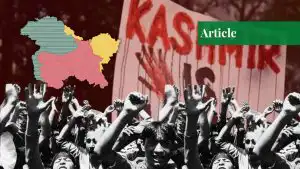
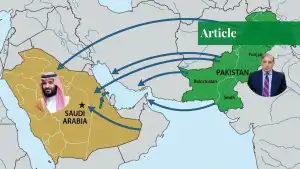
The recent incident in Pahalgam, where unidentified gunmen killed a group of tourists in Indian-occupied Kashmir, killing 26 people, of which 25 were Indian nationals and one was Nepalese. This incident escalated the tensions between nuclear-armed neighbors, i.e., India and Pakistan. It has not only instilled fear in the region but also diverted international attention towards South Asia, highlighting that tension in this nuclearized zone could be a great threat not just for the region itself but far beyond its borders.
India wasted no time in blaming Pakistan for this attack, alleging that the attack was conducted by a Pakistan-based militant outfit known as “The Resistance Front” with the tacit backing of the Pakistan Army. On the other hand, Pakistan rejected these accusations and named the incident a “false flag operation” and also warned India against jumping the gun without any proof. These clashing narratives are common between both adversaries, especially when it comes to Kashmir, the main bone of contention between them since the partition. This shows how much mistrust exists between the two countries, and the media keeps on adding fuel to the fire.
In the aftermath of the Pahalgram attack, India quickly reduced its diplomatic relations with Pakistan. India immediately closed the land borders, sent Pakistani diplomats back, stopped visa services, also reduced the staff at the high commissions. India ordered defense personnel at the Pakistani High Commission to leave India within a week, and Pakistanis in India under the SAARC Visa exemption scheme to leave the country in 48 hours, while others can return by May 1st. India also announced the suspension of the Indus Water Treaty (IWT), which was signed in 1960 with the help of the World Bank. This treaty governs water-sharing from six rivers of the Indus basin.
Pakistan, being an agricultural land, is heavily dependent on these waters. This act will severely impact Pakistan’s energy, agriculture, and food sectors, and other sectors that depend on these waters. This move was retaliated against by suspending the 1972 Simla agreement. Islamabad also shut down its airspace for Indian planes and halted all sorts of trade with India.
India is basically weaponizing the waters as a strategic tool against Pakistan. Her decision to suspend the Indus Water treaty could have serious repercussions. For more than 60 years, the treaty stayed in place even in times of war and conflict. According to the treaty, India controls three rivers (Ravi, Beas, and Sutlej), and Pakistan controls the other three (Indus, Jehlum, and Chenab). By stopping this water, India is provoking Pakistan to take major retaliatory steps.
Indian mainstream media has played a controversial role in this whole scenario. Instead of promoting peace, they are more seen as troublemakers, sharing fake news without facts and proper investigation. For instance, a video of a couple was shared, and people were told that they were dead, but later on, they confirmed on social media that they were alive. Several leading Indian news channels are portraying Pakistan as a terrorist state. On social media, hashtags such as #PakistanTerrorState are trending, despite any credible evidence or international verification.
One of the most concerning aspects of the Pahalgam incident is the way India is portraying Muslims as terrorists. According to their reports, terrorists asked people whether they were Hindu or Muslim and then killed Hindus. Tragically, a Muslim was also among the murdered; however, this information has been brushed under the rug by much of the Indian media. This kind of narrative will strengthen communal biases and also fan the flames of division.
Over 200 million Muslims live in India; if the government and media keep on spreading these kinds of narratives, it could create conflicts between Hindus and Muslims. BJP is known to spread hate for Muslims, which gives them short-term political benefits, but in the long run, it can cause serious issues inside the country.
India and Pakistan are two nuclear-armed states, and this makes the situation more tense. Both countries possess a significant nuclear arsenal; any miscalculation can lead to severe consequences on both sides. Indian media and political leaders push for a military response, which will result in disaster. If a nuclear attack happens, not only will people in South Asia suffer, but the whole world will suffer its consequences.
In the ongoing conflict, it’s the common people who suffer the most on both sides. India’s stopping or increasing the flow of water will affect farmers who depend on that water to cultivate their crops, and these crops are the only source of income for them. Pakistan’s shutdown of airspace will increase the prices of flights, and it can also cause delays in flights.
India can’t refrain from its lowly acts. According to the recent reports, Lieutenant General M.V. Kumar of India stated that the attack was an internal matter of India and Pakistan is not involved in this attack. In response, he was called to New Delhi and dismissed. Furthermore, the Pakistan Army reported shooting down an Indian quadcopter drone that allegedly violated Pakistan’s territory. India has been increasingly curious about Pakistan’s preparedness and wanted to monitor other strategic activities; that’s why a surveillance drone was sent to Pakistan, but fortunately, it was shot down. India wants to take information to prepare accordingly, but it forgets that Pakistan is not sleeping; we know very well how to tackle our enemies.
In light of escalating tensions, it is important for both India and Pakistan to act decisively and to avoid war. Indian media and governmental officials should not give statements that infuriate people more and push them to war; instead, diplomacy should be prioritized. Pakistan remains committed to peace, but it must not be mistaken for weakness. If India initiates any act of aggression, Pakistan will respond with its full capability to protect its sovereignty. But it is better for both sides to engage in dialogue rather than doing an act that can lead to war – an ultimate disaster.
If you want to submit your articles and/or research papers, please visit the Submissions page.
To stay updated with the latest jobs, CSS news, internships, scholarships, and current affairs articles, join our Community Forum!
The views and opinions expressed in this article/paper are the author’s own and do not necessarily reflect the editorial position of Paradigm Shift.
Fareena Abbas is pursuing a BS in defense and strategic studies from Quaid-i-Azam University, Islamabad. She has an interest in cybersecurity and national security. She has worked as an intern at the Senate of Pakistan.