The federal ministries of Pakistan come under the Cabinet of the Prime Minister, with each ministry responsible for overseeing day-to-day operations of their respective sector. Typically, all ministries consist of one division, with the exception of Cabinet Secretariat, which has five divisions, and the Ministry of Energy, the Ministry of Federal Education, Professional Training, National Heritage & Culture, and the Ministry of Finance & Revenue consisting of two divisions.
Each ministry is headed by a federal minister who is a member of the Cabinet; the Minister of State oversees a specific division in each ministry. Following is the brief description of each of the 33 ministries and their divisions in Pakistan.
The Cabinet Secretariat
The Cabinet Secretariat is a core division of Pakistan’s Cabinet, currently led by Prime Minister Shahbaz Sharif. The Cabinet Secretary, or the Federal Secretary, serves as the administrative leader of the Secretariat to provide policy guidance to the Prime Minister who is usually the senior-most BPS-22 grade officer in the Pakistan Administrative Service. Currently, Kamran Ali Afzal serves as the Cabinet Secretary.
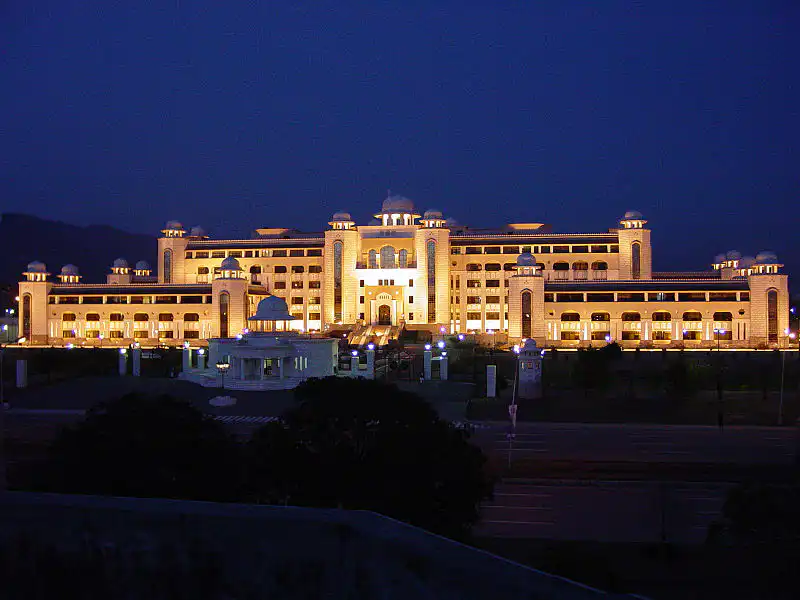
The Cabinet has five following divisions:
- Cabinet Division: The Cabinet Division is responsible for the overall management and administration of the federal cabinet.
- Aviation Division: The Aviation Division aims to regulate and promote civil aviation operations and to build an infrastructure for safe, secure and efficient civil air transport services in Pakistan. The primary factors to achieve their aim are strategy, policy, and supervision.
- Establishment Division: The Establishment Division creates and implements policies pertaining to the administration of public officers to ensure that the civil service is efficiently working in compliance with the government laws and policies.
- National Security Division: The National Security Division works to advance and incorporate efforts on national security and strategic policy planning by using the comprehensive framework of National Security Strategy founded on the tenets of the Constitution of Pakistan.
- Poverty Alleviation and Social Safety (PASS): The goal of the division of PASS is create comprehensive system of social safety for the entire nation by providing possibilities for basic necessities of life and economic growth that enables the vulnerable groups to escape poverty. The organizations of Benazir Income Support Programme (BISP), Pakistan Bait-ul-Maal (PBM), Pakistan Poverty Alleviation Fund (PPAF) and Trust for Voluntary Organizations (TVO) have the mandate to provide poverty alleviation services.
Ministry of Climate Change
The vision of the ministry is to integrate climate change into the economically and socially sensitive sectors and to guide policies of Pakistan’s growth towards climate resilience. The ministry has formulated National Forest Policy, National Climate Change Policy 2012, National Sanitation Policy, and others to ensure climate sustainability.
Ministry of Communications
The Ministry of Communications is the main policy-making body and administrative authority for road infrastructures and connecting businesses and people through communication. It gives relevant stakeholders access to research and training on national highways and motorways.
Ministry of Commerce
The ministry works to improve export competitiveness, lower operating costs, and facilitate trade to boost country’s economy and to enable market access of Pakistani goods.
Ministry of Defense
The ministry uses military forces and other defense capabilities to protect national interests and resources to protect its territorial integrity and sovereignty.
Ministry of Defense Production
MODP works to establish a globally competitive defense production industry through public-private partnerships based on self-reliance to meet establish regional and international leadership in the industry.
Ministry of Economic Affairs
The Economic Affairs Division is in charge of determining the needs, planning, and negotiating terms of external economic assistance from foreign governments and international organizations for the government of Pakistan.
Ministry of Energy
The Ministry of Energy was formed in August 2017 with two main divisions: power division and the energy division. The Power Division primarily handles issues related to electricity including production, transmission and distribution and policy issues that affect these activities. The Energy Division, on the other hand, has been handling the comprehensive plans to meet the nation’s energy demands. It has its additional focus on thermal, coal and renewable energy projects to increase electricity generation.
Ministry of Federal Education, Professional Training, National Heritage & Culture
The ministry aims to eradicate Pakistan’s long-standing system of educational prejudice and to preserve the cultural values in the country. It has the following two divisions:
The Federal Education and Professional Training Division strives to make Pakistan a prosperous nation by giving every citizen an equitable chance to acquire high-quality education and skills they need to reach their potential. It focuses on bringing public attention to education issues and fostering national solidarity around educational policies.
The National Heritage and Cultural Division is tasked with overseeing the national museums and historical sites designated as of national significance, international agreements and support in the field of archaeology. The division also focuses on Quaid-e-Azam Papers Wing, the Pakistan Academy of Letters, and National Language Authority.
Ministry of Finance & Revenue
The ministry aims to support the creation and guarantee the efficient implementation of fair sensible financial and economic policies that lead to long-term growth and macroeconomic stability in order to raise the standard of living of citizens. The divisions working under the Ministry are the following:
The goal of the Finance Division is to strengthen public finance management and accomplish allocative efficiency through best budgetary practices through meaningful collaboration with financial institutions to ensure economic sustainability.
The goal of the Revenue Division is to increase the tax system’s ability to collect overdue taxes by applying contemporary method and building a workforce that is driven and skilled.
Ministry of Housing and Works
For efficient functioning, the ministry comprises of two affiliated departments of Pakistan Public Works Department and Estate Office to implement policies formulated by the state in the housing sector and to provide housing units to federal government employees respectively.
The companies of Federal Government Employees Housing Foundation (FGEHF); Pakistan Housing Authority Foundation (PHA-FOUNDATION) and Pakistan Environmental Planning & Architectural Consultants (PEPAC) Ltd work under administrative control of the ministry.
Ministry of Human Rights
The ministry works to create and strengthen the institutional frameworks required to safeguard and advance the human rights guaranteed by the Constitution of Pakistan, the Universal Declaration of Human Rights, and other multiple international treaties ratified by the Pakistani government.
Ministry of Industries & Production (MoI&P)
MoI&P establishes the conditions necessary for the nation’s industrial growth. The Rules of Business 1973 lay down the functions including industrial strategy, the use of foreign workers in commercial and industrial businesses, the national industrial planning and coordination related to state industrial enterprises, namely State Engineering Corporation, Pakistan Automobile Corporation, Federal Chemical and Ceramics Corporation, Pakistan Steel Mills Corporation, and Pakistan Industrial Development Corporation (PIDC).
Ministry of Information and Broadcasting
The ministry aims to enlighten, educate and entertain the public while fostering media growth, national cohesion, and an educated society. It focuses on projects to advance Pakistan’s progressive image and policies of the government and addresses the propagandas against the state.
Ministry of Information Technology and Telecommunication
The ministry’s work revolves around developing and implementing law and regulation, supplying ICT infrastructure to boost productivity, assisting with good governance, and strengthening the provision of ICT public services.
Ministry of Interior
The ministry is responsible for the implementation of the country’s internal policies to ensure state security. The ministry oversees major organizations such as National Database & Registration Authority (NADRA), Federal Investigation Agency (FIA) and the Islamabad Capital Territory (ICT) Administration, among others.
Ministry of Inter-Provincial Coordination
The ministry was initially founded in 1972, later disbanded and then reinstituted multiple times until it officially started functioning in 2008. The departments of Federal Land Commission, the Department of Tourist Services, the Pakistan Sports Board, the National Internship Program, and more work under the ministry.
Ministry of Kashmir Affairs and Gilgit Baltistan
According to the Rule of Business 1973, the ministry’s responsibilities include policy, planning and development for Gilgit Baltistan; coordination with council of state of Jammu and Kashmir; and matters related to the resolution of the Kashmir dispute.
Ministry of Law and Justice
The ministry functions at cabinet-level with the core responsibility of administration of justice and upholding the law. The concerned minister is in-charge of managing government judicial offices and serves as a public face for providing the legal services required by the state.
Ministry of Maritime Affairs
The ministry governs the license ports; provides maritime infrastructure and services, and oversees port vessel traffic while maintaining security and safety. The offices of Port Qasim Authority, PNSC, and Gwadar Port Authority are administered under this Division.
Ministry of Narcotics Control
The objective of Ministry of Narcotics Control is international cooperation; drug demand and supply reduction; and rehabilitation to ensure drug-free and productive society.
Ministry of National Food Security and Research
In terms of agriculture, the ministry is primarily in-charge of developing policies, coordination and planning. It covers the purchase of food grains, fertilizers, agricultural output import price stabilization, and analysis for agricultural policies.
Ministry of National Health Services, Regulations and Coordination
The ministry’s goal is to enable the citizens to be healthier by providing effective, equitable, accessible and affordable healthcare system.
Ministry of Overseas Pakistanis and Human Resource Development
The ministry and its division designs initiatives to improve employment opportunities overseas and guarantee their well-being by offering respectable working conditions and social security to laborers in Pakistan.
Ministry of Privatization
The ministry has been given the responsibility of transparently privatizing federal government assets, including its stakes in banks, businesses or transportation corporations. The Cabinet Committee on Privatization (CCOP) reviews and approves the decisions before the ratification.
Ministry of Parliamentary Affairs
The primary responsibilities of the ministry include submitting bills passed by the National Assembly to President for his/her approval; drafting legislation concerning the Leader of Opposition and Leader of House; and appointing conditions for Federal Parliamentary Secretaries.
Ministry of Railways (MoR)
MoR’s main duties include developing, managing and planning passenger locomotive services and overseeing railway firms, related industries and organizations. The Railway Division Secretary serves and assists the board in its functions.
Ministry of Science and Technology (MoST)
MoST started functioning in 1972 to oversee the areas of national science and technology polices, development and utilization of nuclear energy, and coordination of scientific manpower utilization.
Ministry of States and Frontier Regions
The ministry handles the matters pertaining to merged states, handling the administration and return of Afghan refugees, financial aspects of Levies Force in Balochistan, and subjects pertaining to the ministry’s tasks delegated by standing committees.
Ministry of Water Resources Division
The functions of MoWR includes issues pertaining to the nation’s water resource development, Indus Basin Works and Indus Water Treaty as well as communication with international commissions in the water sector including the International Commission on Irrigation and Drainage (ICID) and the International Commission on Large Dams (ICOLD).
Ministry of Religious Affairs and Inter-faith Harmony
The ministry’s aim is to uphold the principles of Islam as founded in the Holy Quran and Sunnah and to make sure that minorities are safe under the Constitution. The duties include formulation of Hajj Policy, Ruet-e-Hilal, Tabligh, and other functions.
Ministry of Planning, Development & Special Initiatives
The ministry is in-charge of advising the government on infrastructure, social and economic policies for sustainable development. It includes monitoring and evaluation of development initiatives to ensure their best use and effective execution.
Ministry of Foreign Affairs
MoFA is tasked with directing and implementing the nation’s foreign policy. The main functions include liaison between foreign states and international organizations as well as providing government advice on diplomatic relations.
In conclusion, the federal ministries of Pakistan represent the government’s efforts to navigate the complex international and domestic challenges and are essential in determining country’s path towards development.
If you want to submit your articles and/or research papers, please check the Submissions page.
The views and opinions expressed in this article/paper are the author’s own and do not necessarily reflect the editorial position of Paradigm Shift.

She is pursuing her bachelors in Development Studies at Bahria University. She has a keen interest in fostering positive change and contributing to the betterment of society.