Introduction
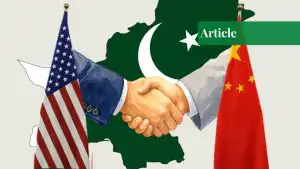
On July 30-31, 2025, Donald Trump, the president of the US, declared a trade agreement with Pakistan. This deal focuses on a joint effort to explore what he termed the massive oil reserves of Pakistan and even hinted at the possibility of Pakistan selling oil to India shortly. This came amidst worsening US-India trade disputes, such as new American duties on Indian coal, steel, and other products—linked with energy policy and foreign policy as well.
The Energy Situation in Pakistan as Compared to Trump’s Claims
Proven Oil Reserves Domestic Production
By 2016, the reserves of crude oil in Pakistan were about 353 million barrels, a position that places it between 50th and 55th in the world in terms of proven reserves. Pakistan is heavily reliant on imports, as its current daily oil consumption stands at about 550,000 barrels, and production has been at an approximate 60,000 barrels/day (~10 % of needs).
The Estimates of the Technically Recoverable Resources
The reason why Trump may be making that claim is probably due to two non-commercial but US government evaluations:
- EIA (2015): An estimate of 9.1billion barrels of shale oil and 105 Tcf of shale gas are in technically recoverable resources, most of it in the Sambar and Ranikot formations.
- USGS (2017): In the Lower Indus Basin, there was an estimated ~164 million barrels of oil and 24.6 Tcf of gas, vastly less, and not yet well proven.
Both of them expressly emphasize that these are not proven reserves and are based on very little geological modeling, not field drilling.
Managerial and Barriers to Investment
Absence of Exploration and Infrastructure
The commercial-scale wells have not yet been drilled in the shale formations of Pakistan. There is no fracking infrastructure; the exploratory and production facilities needed are not present. The current refining capacity is approximately 420,000-450,000 bpd, which is below the domestic needs, and certainly not enough to export to India.
Cost, Time, and Risk
Industry analysts peg the cost of development at between 5 and 10 billion dollars capital-wise and at a development time of 4-7 years to reach initial exploratory confirmation, drilling, and initial production. Additional billions would be required to construct pipelines, refineries, and export infrastructure and would include the proposed Gwadar Oil City mega-refinery (planned ~$10.12b capacity of 250k-300k bpd). The fiscal situation of Pakistan, e.g., approximately 126 billion-dollar external debt and a ~17 billion-dollar annual import bill for energy, consumes and incapacitates its capacity to provide financing to such projects by itself.
Security, Governance, and Geopolitical Risks
Major oil prospects in Balochistan and Khyber Pakhtunkhwa are marred with insurgency, separatism, and poor law and order conditions. China is building energy infrastructure dominantly through the China-Pakistan Economic Corridor (CPEC). Parallel oil efforts backed by the US authorities may stir up friction or clash with Chinese interests.
Motives of Geopolitics and Messaging Strategy
Trump was quick to announce the energy deal hours after he set a tariff of 25 percent on Indian items and criticized India for continuing to buy Russian oil. A strong implication of Pakistan ever being able to provide oil to India was in itself seen as a calculated political message, challenging the Indian energy relations, and implied that the US supports Pakistan. Analysts also interpret the initiative as one among several geopolitical initiatives against Chinese influence in Pakistan.
Near-term Developments
First US Investment and Tendering
Pakistan has opened tenders for about 40 offshore oil and gas blocks where local companies, in affiliation with international firms, make a bid (e.g., Turkish Petroleum Corporation). Trump has affirmed that the US is in the process of selecting the oil firm that will spearhead this partnership. The operator to be used for the contract remains unknown so far.
Expert Commentary and Local Reaction
The announcement was met by local energy experts in Pakistan as a good sign of an untapped energy sector, primarily in offshore areas, but the improvement of security and governance is needed. Nonetheless, skepticism is still rather high; specialists emphasize that until the confirmed reserves, widespread investment, and commercial feasibility are in place, the deal is still only a speculative one.
Mirage or a Major Find?
The Hype Argument
Trump’s announcement does not contain any securifiable deals. The existing reserves of power are not big enough to provide the export-level power generation in Pakistan. The critical resource figures (9 billion barrels) are technically recoverable, not actual reserves; there is expert agreement that these volumes may not convert to commercial quantities. The venture is just too tough due to the financial constraints of Pakistan, infrastructure bottlenecks, uncertainties in the region, and competition with China.
Hidden Treasure Potential
On the positive side, should the seismic and exploratory examinations of the various fields result in a positive outcome, and major foreign investors, especially American ones, get involved, it is possible that Pakistan could become a regional energy player, lessening its reliance on imports and potentially becoming an exporter in the future.
The transaction may help to trigger wider incoming foreign investment into infrastructure development, such as pipelines, refineries (e.g., Gwadar Oil City), and joining up with regional energy systems.
Outlook: What Is to Come
- ·Exploration Phase (2025-2026): There will be tendering of offshore and onshore blocks, and initial seismic and drilling tests are due to be submitted.
- Piloting and Confirmation (Late 2026-2028): In case of success in wells, investment plans are clarified, and a significant operator is chosen.
- Scale and Infrastructure Build-out (2028-2030+): This phase requires the construction of refinery capacity, pipelines, and potential export infrastructure. To achieve success, it will require security transformation, good governance, policy stability, and alignment or difference with the Chinese CPEC project.
Conclusion
Whatever the case may be, the idea of glorifying Pakistan as having oil potential, under Trump or otherwise, is a work in progress. The geological potential is good, on the one hand, but it is not yet proven. On one hand, there is the far form of strategic diplomacy and messaging, whereas on the other hand, the strategic diplomacy and messaging underlying the deal are unmissable.
Without demonstrable reserves, trustworthy investment, and infrastructure, there is a danger that the oil deal becomes more politics than an energy revolution. However, should exploration be successful, and Pakistan and its American partners overcome the technical, financial, and political pitfalls, then there very well may be fantastic treasures lying underneath to find.
If you want to submit your articles and/or research papers, please visit the Submissions page.
To stay updated with the latest jobs, CSS news, internships, scholarships, and current affairs articles, join our Community Forum!
The views and opinions expressed in this article/paper are the author’s own and do not necessarily reflect the editorial position of Paradigm Shift.

Sahibzada Sultan Mohammad Bahoo is a CSS and PMS mentor and descendant of the great sufi saint Hadhrat Sultan Bahoo. He has a keen interest in politics and philosophy.