Introduction
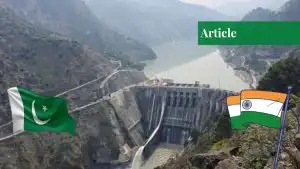
Following the alleged terrorist attack at Pahalgam hill station in Indian Occupied Jammu and Kashmir, India blatantly blamed Pakistan for its execution, claiming that the attack was conducted by Lashkar-e-Taiba (LeT) from Pakistani soil. In retaliation for this attack, the Indian administration started taking diplomatic and strategic steps against Pakistan using economic and political tools. The foremost of it was the suspension of the Indus Water Treaty, which was brokered by the World Bank in 1960. The government of Pakistan responded in a tit-for-tat manner, suspending the Simla Agreement of the 1970s.
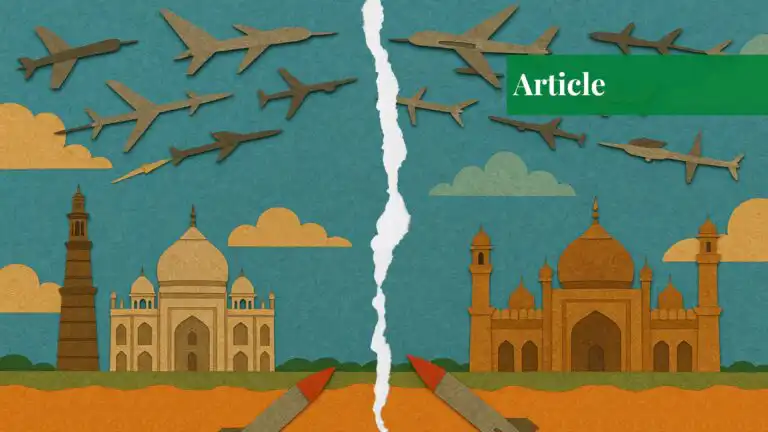
Both states started preparations against each other, with India projecting offensive realism while Pakistan maintaining its status of defensive realism.
 You will find more infographics at Statista
Indian Military Doctrine (2018-2025)
The Indian Army is currently following its Land Warfare Doctrine (LWD) – an offshoot of its Cold Start doctrine launched in 2018. This doctrine mainly focuses on the Indian Army’s threat perception and possible response in limited war scenarios. This doctrine works under the principle of ‘Nuclear Overhang’, which states that two nuclear-powered states could flex their muscles in a limited, conventional war mode under the nuclear umbrella, not exceeding the nuclear threshold.
A significant feature of this doctrine is the establishment of Integrated Battle Groups (IBGs), which are self-sufficient, agile, and flexible fighting units. These IBGs are designed for rapid mobilization and quick responses to emerging threats. The focus is on offensive, defensive, and punitive strikes without dragging into prolonged warfare. This doctrine highly emphasized the importance of joint operations between the Indian Army, Navy, and Air Force.
Historical Perspective
India has conducted various operations against Pakistan from 1948 to the present. These operations are a part of Indian military doctrines, executing covert and overt missions against Pakistan. These include:
1. Operation Trident (1971)
It was a naval operation executed by India on Karachi harbor in 1971. Its objective was to dismantle Pakistan’s naval capabilities and destroy the maritime import and export facilities. The mission was to launch a night-time offensive attack on Karachi Harbor, using three major Indian missile ships, including INS-Nirghat, INS-Nipat, and INS-Veer.
2. Operation Meghdoot (1984)
This operation by the Indian armed forces was executed to capture Siachen Glacier from Pakistan. Its objective was to occupy the heights of the Siachen glacier, thus providing a strategic edge over Pakistan. This operation was conducted mainly through the Indian Air Force, capturing key positions on Siachen Glacier.
3. Operation Safed Sagar (White Sea) -1999
This operation was executed by the Indian Air Force during the Kargil War of 1999. It was followed by Operation Vijay (1999) by Indian land forces. Its objective was to evict intruders belonging to Pakistani soil from the LoC. Indian MiG-21, MiG-23, MiG-27, Mirage-2000, and Mi-17 air platforms were used for precise targets.
4. Operation Bandar (2019)
This operation, code-named ‘Operation Bandar’, was an aerial operation by India on Balakot, Pakistan, in February 2019. The actual plan was to dismantle centers of Jaish–e–Muhammad (JeM) in Balakot, KPK, Pakistan. This Indian offensive was a direct response to the Pulwama attacks of 2019. The Indian Air Force used SPICE-2000 precision-guided bombs for surgical strikes against JeM training camps located in Balakot. The operation was conducted in 30 minutes, with India labelling it as ‘a non-military pre-emptive strike’.
Operation Sindoor – 2025
Operation Sindoor is a major military operation carried out by India on May 6, 2025, attacking terrorist infrastructure in Pakistan and Pakistan-occupied Kashmir. Operation Sindoor was specifically a response to the Pahalgam terror attack that had occurred on April 22, 2025, where 26 Hindu pilgrims lost their lives. Following the 2018 Landwarfare doctrine, India conducted an integrated attack involving its triad forces, striking nine locations in Pakistan with five strikes in Pakistan-Occupied Kashmir.
| No. | Locations in Pakistan |
| 1. | Markaz Subhan Allah, Bahawalpur – JeM |
| 2. | Markaz Taiba, Muridke – LeT |
| 3. | Sarjal, Tehra Kalan – JeM |
| 4. | Mehmoona Joya, Sialkot – HM |
| 5. | Markaz Ahle Hadith, Barnala – LeT |
| 6. | Markaz Abbas, Kotli – JeM |
| 7. | Maskar Raheel Shahid, Kotli – HM |
| 8. | Shawai Nalla Camp, Muzaffarabad – LeT |
| 9. | Syedna Bilal Camp, Muzaffarabad – JeM |
According to official reports, women and children were killed as a result of Indian strikes. According to General Ahmed Sharif Chaudhry, 8 civilians were killed and more than 35 were injured in Punjab and Pakistan-administered Kashmir.
Retaliation by the Pakistan Armed Forces
Before the execution of Operation Sindoor by India, the Pakistani Armed Forces had started demonstrating their power via military exercises and drills close to the Indian borders. Pakistan Army test-launched its missile, belonging to the Abdali weapon System – a surface-to-surface missile with a range of approximately 450 km. It was a clear signal to India that any counter-value or counter-force attack against Pakistan would be responded to in a full-fledged manner. In response to Indian Integrated Battle Approach under its Land Warfare doctrine, Pakistan also conducted integrated exercises and drills involving its triad forces.
Pakistan Army has conducted ‘Exercise Hammer Strike,’ and Pakistan Air Force conducting ‘Zarb-i Haideri’, ‘Fiza-i-Badar’, and ‘Lalkar-i-Momin’ under its Southern, Northern, and Central Air Commands respectively. Pakistan Navy is also conducting its exercises in the Arabian Sea. Bangladesh and Turkish Naval ships have entered Pakistani waters to depict solidarity with Pakistan.
| No. | Indian Military Installations Targeted by Pakistan |
| 1. | Kupwara |
| 2. | Baramulla |
| 3. | Bandipora |
| 4. | Poonch |
| 5. | Rajouri |
| 6. | Kargil |
| 7. | Leh (Drass) |
| 8. | Akhnoor |
In retaliation for India’s aggressive counter-value strikes in Pakistan, Pakistan’s armed forces have responded in a tit-for-tat manner. Pakistan Air Force successfully targeted and shot down five Indian planes, including three Rafale, a Sukhoi Su-30, a MiG-29, and an IAI Heron unmanned aerial vehicle. Remnants of at least three planes were said to have been recovered in Indian-held Kashmir and Punjab. The Pakistan Air Force (PAF) made retaliatory raids, claiming the destruction of an Indian brigade headquarters and a military checkpoint. India has refuted these assertions.
International Intervention
Due to the offensive and aggressive attitude of Indian strategic thinking, the South Asian region is once again on the brink of a full-fledged war between the two nuclear-powered neighbours. Due to nuclear deterrence, both states will restrain themselves from crossing each other’s nuclear threshold. But there still remains a clear threat of future escalation. This threat perception is related to the civilians and family members of LeT and JeM killed in Pakistan. These non-state factions will try to take revenge against the alleged Indian attacks.
International interventions, especially of the United States, are a dire need of the time. The global players must force both states to de-escalate the tensions and resolve the issue bilaterally. Additionally, the UN must have to take serious actions in this regard. Before Indian Operation Sindoor, the US Vice President JD Vance had stated that the US does not want the two nuclear powers (India and Pakistan) to indulge in any kind of war. Similarly, the US Secretary of State Marco Rubio also emphasized on decrease in tensions and normalization of the relationship between the two states.
Conclusion
The resolution of disagreements between Pakistan and India lies in the fact that the Kashmir issue is still unresolved. With the abrogation of articles 370 and 35-A, India is trying to alter the demographics of the region, causing internal instability and attacks by violent non-state actors in Indian occupied Kashmir. India must understand that the root cause of the tensions between the states is the Kashmir conflict. The international community must have to take this into account, forcing India to resolve the Kashmir issue by the right of self-determination of the Kashmiri people.
If you want to submit your articles and/or research papers, please visit the Submissions page.
To stay updated with the latest jobs, CSS news, internships, scholarships, and current affairs articles, join our Community Forum!
The views and opinions expressed in this article/paper are the author’s own and do not necessarily reflect the editorial position of Paradigm Shift.

Syed Hammad Ali is pursuing a BS in International Relations programme from the International Islamic University, Islamabad, and has a keen interest in research works, policy analysis, defence and strategic studies, and conflict resolution.